Shy Waitress Greeted The Mafia Boss’s Sicilian Father—Her Native Dialect Stunned Everyone
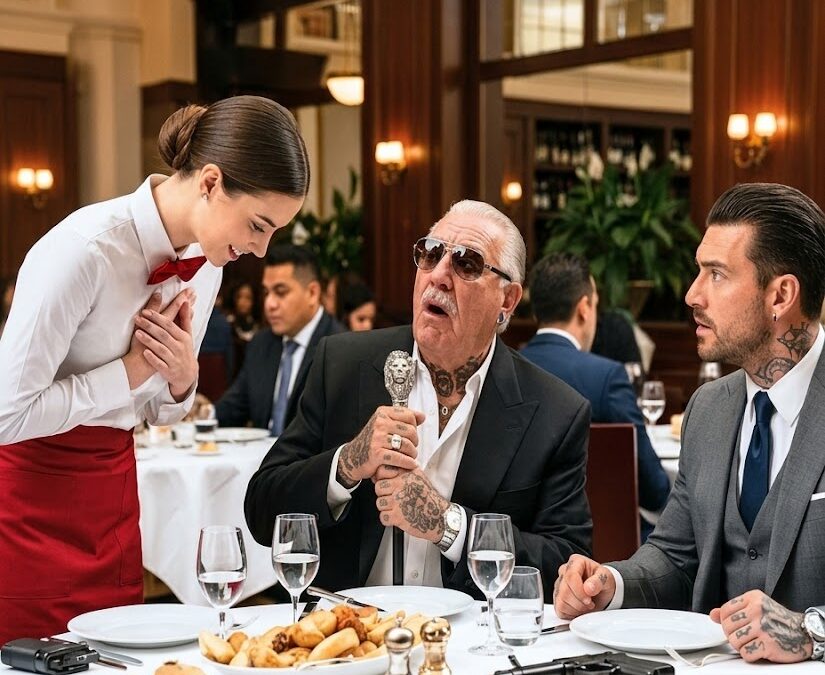
Shy Waitress Greeted The Mafia Boss’s Sicilian Father—Her Native Dialect Stunned Everyone
Chapter 1: The Waitress Nobody Noticed
The first time Isabella Romano spoke to Don Vittorio Moretti, three armed men reached for their guns.
It happened on a rainy Friday evening at the most exclusive Italian restaurant in New York City.
The restaurant, Bellissimo, was famous for its expensive wine, imported marble, and strict privacy policy. Politicians dined in its private rooms. Billionaires celebrated business deals beneath its crystal chandeliers. And men with dangerous reputations conducted conversations that never appeared in newspapers.
But that night, the entire restaurant belonged to one man.
Alexander Moretti.
At thirty-six, Alexander was one of the most powerful men in the city. He wore tailored black suits, spoke only when necessary, and possessed a cold stare that could silence an entire room.
People called him the Wolf of New York.
Nobody challenged him.
Nobody interrupted him.
And nobody approached his table without permission.
Unfortunately, Isabella Romano had no idea who he was when she started working at Bellissimo three months earlier.
She was twenty-five, painfully shy, and struggling to pay her mother’s medical bills. She had moved to New York from a small Sicilian village after losing her father, hoping that a fresh start would help her family escape years of financial hardship.
She worked double shifts, sent most of her salary home, and rarely spoke unless a customer addressed her first.
Her coworkers often teased her gently.
“Isabella, you know you’re allowed to smile, right?”
She would blush and lower her eyes.
“I do smile.”
“Not when Mr. Ricci asks you to recommend a dessert.”
“Mr. Ricci asked me to recommend a dessert while explaining why his business partner deserved to disappear.”
Her coworker would stare.
Then Isabella would whisper, “I thought it was better not to interrupt.”
She wasn’t weak.
She simply disliked attention.
And attention was precisely what she had spent her entire life avoiding.
Until the evening Don Vittorio Moretti walked into the restaurant.
The moment he entered, the atmosphere changed.
He was seventy-two years old, with silver hair, a dark walking cane, and eyes that looked as though they had witnessed every kind of betrayal imaginable.
He wore a charcoal suit beneath a long black coat.
Two bodyguards followed him.
Alexander immediately stood from his chair.
“Father.”
Vittorio embraced his son briefly before taking his seat.
“You look tired, Alessandro.”
Alexander’s expression tightened.
“You’ve been saying that for twenty years.”
“And you’ve been working too much for twenty years.”
A few men at the table laughed nervously.
Vittorio did not.
He looked around the restaurant with obvious displeasure.
“Is this what you call Italian food?”
Alexander sighed.
“Father, please.”
“The sauce smells like it came from a factory. The bread is cold. And whoever chose this wine should be forbidden from entering Italy.”
Nobody dared respond.
The manager hurried over.
“Don Vittorio, I sincerely apologize. We’ll replace everything immediately.”
Vittorio waved him away.
“Don’t apologize. Fix it.”
The manager practically ran toward the kitchen.
Alexander rubbed his forehead.
His father had spent forty years building the family’s influence in Sicily before moving much of his business abroad. He distrusted modern conveniences, disliked unfamiliar people, and believed that almost everything worth knowing had been lost by the younger generation.
Especially the Sicilian language.
To Vittorio, Sicilian wasn’t merely a dialect.
It was the sound of his childhood, his mother’s kitchen, and a village he had not seen in nearly thirty years.
He rarely spoke it anymore.
And he had never heard anyone in New York speak it the way his mother had.
Until Isabella approached his table.
She carried a fresh basket of bread and a small bowl of homemade olive oil.
Her hands trembled slightly.
“Good evening, gentlemen. I’m sorry about the delay.”
Vittorio looked up.
“Who sent you?”
Isabella swallowed.
“The kitchen, sir.”
“Then tell the kitchen that bread should arrive warm, not resurrected from the dead.”
Alexander closed his eyes.
“Father.”
But Isabella did something nobody expected.
She smiled faintly, set the basket on the table, and replied in a soft Sicilian dialect.
“Aviti raggiuni, signuri. U pani senza caluri è comu na casa senza vuci.“
You’re right, sir. Bread without warmth is like a house without a voice.
The restaurant fell silent.
Vittorio slowly lifted his head.
His fingers tightened around his walking cane.
For several seconds, he simply stared at her.
Then he spoke in Sicilian.
“Di unni veni, picciridda?“
Where are you from, little girl?
Isabella’s eyes widened.
“Sugnu di Castellammare, vicinu a Trapani.“
I’m from Castellammare, near Trapani.
Vittorio rose so quickly that his chair scraped across the floor.
One of his bodyguards immediately reached inside his jacket.
Alexander stood.
“What’s happening?”
But his father wasn’t looking at him.
Vittorio stared at Isabella as if he had just seen a ghost.
Then he asked a question that made Alexander’s blood run cold.
“Qual è u nomu di to matri?“
What is your mother’s name?
Isabella hesitated.
“Lucia Romano, sir.”
Vittorio’s face went completely white.
The glass in his hand slipped onto the table.
He whispered a name nobody in the Moretti family had heard in thirty years.
“Lucia…”
Then he looked at Isabella again.
And said, in a trembling voice:
“Figghia di Maria?“
Maria’s daughter?
Isabella’s basket nearly fell from her hands.
Because Maria was the name of the grandmother her mother had always refused to discuss.
The grandmother who had supposedly died before Isabella was born.
And the woman whose old photograph Isabella had found hidden inside a family Bible only two weeks earlier.
A photograph of a young woman standing beside a handsome Sicilian man.
A man who looked exactly like Don Vittorio Moretti.
Chapter 2: The Name Hidden in an Old Photograph
Alexander had seen his father angry.
He had seen him threaten men who owed him money, negotiate with enemies, and stand perfectly calm during situations that would have made other people panic.
But he had never seen Vittorio frightened.
Now the old man was staring at a waitress as though the past had returned to claim him.
“Father,” Alexander said carefully. “Do you know this woman?”
Vittorio ignored him.
He turned toward Isabella.
“Tell me your grandmother’s full name.”
Isabella swallowed.
“Maria Bellafiore Romano.”
Vittorio gripped the edge of the table.
One of his guards stepped closer.
“Don Vittorio?”
“Be quiet.”
The guard immediately retreated.
Vittorio looked at Isabella’s face, studying her dark eyes, the small dimple in her left cheek, and the delicate curve of her nose.
Then he whispered, “You have her eyes.”
Isabella didn’t know what to say.
“Sir, I think there may be some mistake.”
“No.”
Vittorio’s voice cracked.
“No, bambina. There is no mistake.”
He looked toward Alexander.
“Get everyone out of this room.”
Alexander immediately understood that this wasn’t an ordinary family conversation.
He turned toward the restaurant manager.
“Close the private dining room. Nobody comes in until I say otherwise.”
Within minutes, the room was empty except for Alexander, Vittorio, Isabella, and two guards stationed near the door.
Isabella stood beside the table, clutching her apron.
“I should return to work.”
Vittorio looked at her.
“Please.”
The single word stopped her.
He had spoken to everyone else like a king issuing commands.
But now he sounded like an old man begging for one more minute.
“Please sit down.”
Isabella hesitated before taking the chair opposite him.
Alexander remained standing.
“Father, explain.”
Vittorio stared at Isabella.
“Thirty-two years ago, I had a younger sister named Maria.”
Isabella’s breath caught.
“Your sister?”
Vittorio nodded.
“She was the kindest person in our village. She could calm a crying child with a song and feed an entire family with a pot of beans. She loved flowers, old books, and a man she had no permission to love.”
He paused.
“His name was Salvatore Romano.”
Isabella’s fingers went numb.
Her grandfather.
The man her mother had described as a quiet fisherman who died before she could remember him.
Vittorio continued.
“Our father wanted Maria to marry the son of a powerful family. Maria refused. She wanted Salvatore, a poor young man with nothing to offer except his heart.”
“And what happened?” Alexander asked.
Vittorio looked down at his hands.
“Our father threatened to disown her. Maria left Sicily with Salvatore. She wrote me a letter promising that one day she would return.”
His voice became quieter.
“That letter never came.”
Isabella stared at him.
“My mother told me her parents died when she was very young.”
“Did she tell you where?”
“She said there had been an accident. A boat caught fire during a storm.”
Vittorio closed his eyes.
“That is what I was told, too.”
For a moment, nobody spoke.
Then Alexander asked the question that had been building in his mind.
“How do we know she’s telling the truth?”
Isabella flinched.
Vittorio immediately turned toward his son.
“Because I recognize my sister’s face when I see it.”
“That isn’t proof.”
“No,” Vittorio agreed. “It isn’t.”
He looked back at Isabella.
“Do you have anything that belonged to your grandmother?”
Isabella nodded slowly.
“A photograph. And a silver pendant my mother keeps in a locked box.”
“What does the pendant look like?”
“A small olive branch with a blue stone in the center.”
Vittorio stopped breathing.
His hand moved to the chain beneath his shirt.
He pulled out a silver pendant.
It was almost identical.
The same olive branch.
The same blue stone.
Except the pendant around Vittorio’s neck had a small inscription on the back.
M + V. Sempre famiglia.
Maria and Vittorio. Family forever.
Isabella covered her mouth.
Alexander stared at his father.
“Where did you get that?”
“Maria gave it to me when we were children.”
Vittorio looked at Isabella.
“She had the other half made for herself.”
Tears began gathering in his eyes.
“All these years, I thought my little sister was dead.”
Isabella whispered, “My mother never knew you were alive.”
Vittorio reached for her hand, then stopped before touching it.
“May I?”
Isabella nodded.
He held her hand gently.
“Forgive me, bambina. I should have found you.”
And for the first time in thirty years, Don Vittorio Moretti cried in front of another person.
Chapter 3: The Mafia Boss Makes an Unexpected Decision
Alexander dismissed the remaining guards from the room.
He poured his father a glass of water and ordered tea for Isabella.
Then he sat opposite them.
“I want to understand something,” he said. “If Maria was your sister, why didn’t you search for her?”
Vittorio looked toward the dark windows.
“I did.”
His voice was tired.
“For years, I searched every port, every hospital, and every village where someone claimed to have seen her. I hired investigators. I contacted people who owed me favors.”
He paused.
“But someone had destroyed the records. The letters I sent were returned. And eventually, the people helping me began disappearing.”
Alexander’s expression hardened.
“Someone deliberately stopped you from finding her.”
“Yes.”
“Who?”
Vittorio shook his head.
“I don’t know.”
He looked at Isabella.
“Your mother may know more than I do.”
Isabella lowered her eyes.
“My mother doesn’t talk about Sicily. Whenever I ask about my grandmother, she becomes upset. Once, she told me that our family had been punished for loving the wrong person.”
Vittorio’s face tightened.
“That sounds like our father.”
Alexander leaned forward.
“What happened to him?”
“He died twenty years ago. Before he died, he confessed that he had made terrible mistakes. But he never told me where Maria had gone.”
A waiter knocked softly and entered with the tea.
Isabella thanked him in Sicilian without thinking.
“Grazzi, caru.“
Thank you, dear.
The waiter stopped.
He looked at her with surprise.
Then he smiled and answered in the same dialect.
“Nenti, signurina. Bonasira.“
You’re welcome, miss. Good evening.
Vittorio watched the exchange with an expression that was almost painful.
When the waiter left, he turned to Isabella.
“Do you know what you just did?”
She looked confused.
“I thanked him.”
“No. You gave me something I thought I would never hear again.”
He smiled sadly.
“My mother used to speak exactly like you. The same rhythm. The same little expressions. Even the way you soften the final words.”
Isabella’s cheeks flushed.
“I grew up speaking it with my mother and grandmother.”
Vittorio went still.
“Your grandmother?”
“She lived with us until I was five. I remember very little about her. Just her voice, her cooking, and the songs she used to sing.”
He leaned closer.
“What songs?”
Isabella hesitated.
Then she hummed a short melody.
It was a lullaby her mother still sang whenever she was ill.
Vittorio’s face changed.
He joined her on the final line.
His voice trembled as he sang the words in Sicilian.
Alexander looked between them.
“How do you know that song?”
Vittorio wiped his eyes.
“Because my mother sang it to Maria. And Maria sang it to me when I was a boy.”
The room fell silent again.
For the first time, Alexander understood why his father had reacted so strongly.
Isabella wasn’t merely a waitress who spoke an old dialect.
She was a living piece of the family Vittorio had lost.
And she had unknowingly carried their language, songs, and memories across an ocean.
Alexander turned toward her.
“Isabella, I have a question.”
She straightened nervously.
“Yes, sir?”
“Why are you working here?”
She blinked.
“Because I need money.”
“I mean, what happened to your family?”
She looked down at her hands.
“My mother is sick. She needs treatment, and I have two younger brothers. I send money home every month.”
Alexander glanced at his father.
Then he made a decision.
“Your mother will receive the best medical care we can arrange. Your brothers’ education will be covered. And you will never have to worry about paying for their basic needs again.”
Isabella immediately shook her head.
“No, sir. I can’t accept that.”
Alexander raised an eyebrow.
“You haven’t even heard the details.”
“I don’t want money just because of who my grandmother was.”
Vittorio smiled faintly.
“Good.”
Alexander looked at him.
“Good?”
“My niece has dignity.”
Vittorio turned back to Isabella.
“But this isn’t charity, bambina. This is family helping family.”
Isabella’s eyes filled.
“I don’t know if I can believe that yet.”
Vittorio nodded.
“Then don’t believe it yet. Let us prove it.”
He removed his expensive watch and placed it on the table.
“This belonged to my mother. I carried it for forty years.”
He pushed it gently toward Isabella.
“If your mother recognizes it, perhaps she will believe that I am who I say I am.”
Isabella stared at the watch.
Then she whispered, “I’ll call her.”
She took out her phone and dialed.
The call connected after three rings.
“Isabella? Is everything all right?”
“Mamma, I need to ask you something.”
“What happened?”
Isabella looked at Vittorio.
Then she asked in Sicilian:
“Mamma, tu ti ricordi di ziu Vittorio?“
Mama, do you remember Uncle Vittorio?
There was a long silence.
Then her mother’s voice broke.
“Where did you hear that name?”
Isabella looked up.
Vittorio had gone completely still.
Because Lucia Romano had just confirmed the one thing he had feared for thirty years.
His sister was alive.
And she had been hiding from him.
Chapter 4: The Phone Call That Broke a Thirty-Year Silence
“Isabella, listen to me carefully.”
Lucia’s voice trembled through the phone.
“Where are you?”
“At the restaurant.”
“Are you alone?”
“No. I’m with Don Vittorio Moretti.”
A sharp gasp came from the other end.
Then Lucia began crying.
“Put him on the phone.”
Isabella handed the phone to Vittorio.
For several seconds, he couldn’t speak.
He had imagined this moment a thousand times.
He had pictured himself demanding answers, asking why his sister had abandoned him, and explaining how much he had suffered.
Instead, when he finally spoke, he used the same words he had whispered to Maria when they were children.
“Sorella mia… si tu?“
My sister… is that you?
Lucia made a sound that was half sob, half laugh.
“Vittorio? Frati miu?“
Vittorio? My brother?
The old man’s shoulders began shaking.
“Maria?”
“No, fratello. It’s Lucia.”
He closed his eyes.
“Lucia…”
For thirty years, he had imagined that name belonging to a little girl running through the orange groves behind their childhood home.
Now it belonged to a grown woman who had spent years believing that her family had been erased.
“I’m sorry,” Lucia whispered. “I’m so sorry.”
Vittorio pressed the phone against his ear.
“Why didn’t you come home?”
“I couldn’t.”
“Why?”
“Because I was afraid.”
“Of me?”
“No!”
Lucia’s voice broke.
“Never of you. I was afraid of what our family had become.”
Vittorio looked at Alexander.
His son had stopped moving.
“Tell me what happened,” Vittorio said.
Lucia was silent for a long time.
Then she began.
When Maria and Salvatore had fled Sicily, they had believed they could start a new life in America.
They were wrong.
A powerful local family had been furious that Maria refused the marriage arranged for her. They had threatened Salvatore and followed the couple after they left the island.
Months later, their boat was found damaged after a storm.
Salvatore was never seen again.
Maria survived, but she was badly injured. With help from a fisherman, she eventually reached the coast of southern Italy and disappeared into a small village.
She gave birth to Lucia the following year.
For years, she lived quietly, working wherever she could and avoiding anyone connected to her former family.
Before she died, she told Lucia one thing.
“If you ever hear the name Moretti, remember that your uncle once loved me. But never trust the men who carry our father’s name.”
Lucia had interpreted the warning as proof that the Moretti family was dangerous.
She left Sicily with her husband and settled in a small American town, determined to keep her daughter away from the past.
“Your grandmother never stopped loving you,” Vittorio whispered.
Lucia cried harder.
“She kept your photograph beside her bed until the day she died.”
Vittorio covered his face.
“I should have found her.”
“You couldn’t have known.”
“I was her brother.”
“And she was my mother. We both lost her.”
For a long moment, neither spoke.
Then Lucia said something that made Alexander sit forward.
“There’s something else you need to know.”
Vittorio straightened.
“What?”
“Maria didn’t leave Sicily because of our father alone. She discovered that one of his closest advisers was secretly working with the Bellandi family.”
Alexander’s eyes narrowed.
The Bellandis were an old criminal family whose influence had clashed with the Morettis for generations.
Lucia continued.
“They wanted access to your father’s shipping routes. Maria found documents proving it. When she threatened to reveal the truth, they tried to silence her.”
Vittorio’s expression turned cold.
“Who was the adviser?”
Lucia hesitated.
“His name was Enzo Bellafiore.”
Vittorio went pale.
Enzo had been his father’s most trusted adviser.
He had also been the godfather of Alexander’s mother.
And he had died peacefully in Sicily fifteen years earlier.
Alexander stood.
“That means someone else was involved.”
Lucia whispered, “Yes.”
Vittorio’s hand tightened around the phone.
“Who?”
“Before Maria died, she told me that Enzo had a son. She believed he had inherited his father’s secrets.”
Alexander looked toward the window.
The Moretti family had enemies everywhere.
But one name immediately came to his mind.
Marco Bellafiore.
A respected businessman who had recently begun buying properties near the Moretti estate.
A man who had been invited to Alexander’s wedding.
A man who had dined at their table less than two weeks earlier.
Alexander slowly turned toward his father.
“Father, we have a problem.”
Vittorio nodded.
“No, Alessandro.”
He looked at Isabella, who was still holding the phone.
“We have a family problem.”
And for the first time in thirty years, the Morettis and the Rom anos were about to face their past together.
Chapter 5: The Dinner That Turned Into a Trap
Three nights later, Alexander invited Isabella and her mother to the Moretti estate.
Lucia arrived wearing a simple navy dress, her hands trembling as she stepped through the enormous front doors.
Vittorio waited in the entrance hall.
For several seconds, they simply looked at each other.
Lucia was forty-eight now.
Her dark hair had begun turning silver, and years of illness had left her face thinner than it once was.
But Vittorio recognized Maria’s expression in her eyes.
“Lucia?”
She nodded.
“Fratello.”
He crossed the room and embraced her.
They held each other for a long time.
No guards interrupted them.
No one spoke.
Even Alexander looked away, giving them a moment that had been stolen from them for decades.
Later, they sat together in the dining room.
Vittorio insisted that the chef prepare traditional Sicilian dishes: pasta alla Norma, fresh bread, grilled fish, and cannoli filled with ricotta.
Isabella helped arrange the table.
When Vittorio tasted the sauce, he closed his eyes.
“Finally. Food that remembers where it came from.”
Isabella laughed.
Lucia smiled at the sound.
For a little while, the room felt like an ordinary family home.
Then Alexander’s phone rang.
He checked the screen.
Marco Bellafiore.
He answered.
“Marco.”
“Alexander, my friend. I heard your father has returned to New York. I would love to welcome him properly.”
Alexander glanced at Vittorio.
“That’s generous.”
“I was thinking dinner tomorrow evening. Just family and a few old friends.”
Alexander’s eyes narrowed slightly.
“Perhaps.”
Marco chuckled.
“Bring the waitress, too. I’ve heard she’s become quite important.”
Alexander said nothing.
Marco continued.
“Tell your father I send my regards. And tell Isabella that her grandmother was a very interesting woman.”
The call ended.
Alexander slowly lowered the phone.
Vittorio watched him.
“What did he say?”
Alexander repeated the conversation.
Lucia’s face went white.
“He knows.”
“Knows what?” Isabella asked.
Her mother looked at Vittorio.
Then she whispered, “The documents.”
The room fell silent.
Lucia explained that Maria had hidden copies of the documents proving Enzo Bellafiore’s betrayal. Before her death, she had told Lucia that the original papers had been placed somewhere safe.
But Lucia had never discovered where.
“Marco must believe I know where they are,” she said.
Alexander rose.
“Then we won’t attend his dinner.”
Vittorio shook his head.
“Yes, we will.”
“Father, this could be a trap.”
“Of course it’s a trap.”
Vittorio looked at his son.
“But if Marco believes he can frighten our family into silence, then he has forgotten who we are.”
Alexander’s jaw tightened.
“I’m not risking Isabella or her mother.”
Isabella looked up.
“I want to go.”
Everyone turned toward her.
“No,” Alexander said immediately.
She swallowed.
“Those documents may prove what happened to my grandmother. They may explain why my mother spent her entire life afraid.”
“You don’t know what you’re walking into.”
“Neither do you.”
The words escaped before Isabella could stop them.
She immediately lowered her eyes.
“I’m sorry.”
Alexander studied her.
Then, unexpectedly, he smiled.
“Don’t apologize for telling the truth.”
He turned to Dominic.
“Prepare a security team. No weapons inside the dining room unless absolutely necessary. I want every exit covered, and I want the police informed of any credible threat.”
Vittorio raised an eyebrow.
“You’re becoming cautious.”
“I’m becoming a father.”
Alexander looked toward his father’s old photograph on the wall.
“And I’m tired of burying people I love.”
Chapter 6: The Secret Hidden in the Sicilian Song
Marco Bellafiore’s mansion stood on a hill overlooking the city.
It was beautiful, expensive, and guarded by men who watched every approaching vehicle.
Alexander arrived with Vittorio, Lucia, and Isabella shortly after eight o’clock.
Marco greeted them at the door.
He was a handsome man in his early fifties, with silver at his temples and a smile that never quite reached his eyes.
“Alexander! Don Vittorio! What an honor.”
He kissed Lucia’s hand.
Then he turned toward Isabella.
“So this is the famous waitress.”
Isabella offered a polite smile.
“My name is Isabella.”
“Of course.”
Marco’s gaze lingered on her face.
“You look remarkably like your grandmother.”
Vittorio’s expression hardened.
“Did you know Maria?”
Marco laughed softly.
“My father knew everyone in Sicily.”
“That wasn’t my question.”
For a moment, Marco’s smile disappeared.
Then he gestured toward the dining room.
“Shall we?”
Dinner proceeded with uncomfortable politeness.
Marco spoke about business, art, and the changing political landscape in Sicily.
But every few minutes, he returned to the same subject.
Maria.
Her departure.
Her letters.
The documents she had supposedly hidden.
Finally, he put down his wineglass.
“Let’s stop pretending. Lucia, your mother left something behind. I believe you know where it is.”
Lucia’s hands trembled.
“I don’t.”
Marco sighed.
“Your mother caused a great deal of trouble.”
Vittorio leaned forward.
“She was trying to protect her family.”
“She was trying to destroy a business arrangement that had existed for generations.”
“A criminal arrangement,” Alexander replied.
Marco smiled coldly.
“Words are convenient things, aren’t they?”
He signaled to one of his guards.
A small wooden box was placed on the table.
Inside lay an old photograph, a silver pendant, and a folded piece of paper.
Lucia gasped.
“That’s Maria’s handwriting.”
Marco pushed the paper toward her.
“Read it.”
Lucia unfolded it.
The note contained only a few lines in Sicilian.
She read them silently, then looked at Isabella.
“I don’t understand.”
Isabella took the paper.
She recognized the words immediately.
It was written in an old form of the dialect, the kind her grandmother had used when singing lullabies.
She read it aloud.
“Quannu u silenziu ti pari sicuru, canta chidda canzuna ca non t’hannu mai lassatu cantari.“
When silence seems safe, sing the song they never allowed you to sing.
Isabella frowned.
“What does it mean?”
Marco’s smile widened.
“Perhaps your grandmother wanted you to sing.”
Vittorio shook his head.
“No. Maria was never cryptic without a reason.”
Isabella read the note again.
Then she remembered something.
Her grandmother had always sung the same lullaby whenever the family gathered around the kitchen table. But whenever someone asked about its origin, Maria would stop abruptly.
Once, when Isabella was very young, she had asked why.
Her grandmother had kissed her forehead and said, “Some songs are safer when only the family knows them.”
Isabella looked up.
“I know the song.”
Marco stopped smiling.
“What?”
“My grandmother sang it to me.”
Vittorio’s eyes widened.
“Can you remember the words?”
“Some of them.”
She began softly.
“Nni la luna supra u mari, dormi, cori, senza pinseri…“
Under the moon above the sea, sleep, my heart, without a worry…
Vittorio joined her.
His voice trembled.
“U ventu porta li ricordi, ma la casa resta cca…“
The wind carries memories, but the home remains here…
Lucia stared at him.
“That’s the song Maria used to sing to me.”
Isabella continued.
As she sang, she remembered the old melody, the gentle rise and fall of the words, and the strange pause her grandmother always made before the final verse.
She stopped.
“Wait.”
She repeated the last line.
Then she realized something.
The first letter of each line, when written in the old Sicilian spelling her grandmother had taught her, formed a sequence of initials.
M. B. V.
Maria Bellafiore Vittorio.
And beneath the initials was a number.
17-04-1989.
Vittorio stared at the paper.
“The date of our mother’s funeral.”
Isabella nodded slowly.
“My grandmother hid a message inside the song.”
Marco abruptly stood.
“Enough.”
His guards moved toward the table.
Alexander immediately rose.
“Sit down, Marco.”
Marco ignored him.
“Give me the paper.”
Isabella clutched it against her chest.
“No.”
Marco’s expression turned vicious.
“You have no idea what you’re holding.”
“Then explain it.”
He reached across the table.
Alexander caught his wrist.
“Touch her again, and this dinner ends very badly for you.”
Marco struggled free.
“You think your family can threaten me forever?”
Vittorio rose slowly.
“No, Marco.”
His voice was quiet.
“Your father threatened my sister. You threatened her daughter. And now you’ve threatened her granddaughter.”
He stepped closer.
“Three generations of women have suffered because your family was afraid of the truth.”
Marco’s eyes flickered toward the guards.
Then he laughed.
“You don’t have the documents.”
Isabella looked down at the note.
Suddenly, she understood.
“The song isn’t the message,” she whispered. “It’s the location.”
She looked at Vittorio.
“The date is a clue. April seventeenth, 1989. That’s when your mother was buried.”
Vittorio nodded slowly.
“Her grave is in Castellammare.”
“And the family chapel is beside it,” Lucia said.
Isabella looked at the old photograph.
“The song mentions a house that remains. Maybe the documents are hidden in the chapel.”
Marco’s face went white.
For the first time that evening, he looked genuinely afraid.
Alexander noticed.
And that was all the confirmation he needed.

Chapter 7: The Chapel Beneath the Olive Trees
The next morning, Alexander, Vittorio, and Isabella traveled to Sicily with a team of investigators.
Lucia remained in New York under protection.
Marco Bellafiore had been detained after officers discovered evidence linking him to threats, fraud, and the destruction of historical records.
But the family still needed to find the documents.
Castellammare was exactly as Vittorio remembered it.
Narrow streets wound between pale stone buildings. Fishing boats moved across the harbor. The scent of lemons and sea salt drifted through the air.
Vittorio stood at the edge of the village, staring toward the hills.
“I thought I’d never come back.”
Isabella took his arm.
“You’re home now.”
He looked at her with a sad smile.
“Your grandmother used to say the same thing.”
They reached the old family chapel shortly before noon.
It stood beneath two ancient olive trees, its stone walls weathered by decades of wind and rain.
The door was locked.
Vittorio produced a small key from a chain around his neck.
“I’ve carried this for thirty years.”
The lock turned.
Inside, the chapel smelled of dust and candle wax.
Sunlight filtered through a narrow window, illuminating a row of old wooden benches.
At the far end stood a marble memorial dedicated to the Moretti family matriarch.
Vittorio approached it slowly.
He touched the inscription with his fingertips.
“Madre mia,” he whispered.
Then he knelt.
For a long time, he said nothing.
Alexander remained beside the doorway.
Isabella gave Vittorio a few minutes before approaching the memorial.
She studied the marble.
Then she noticed something unusual.
The final line of the inscription had been carved differently from the rest.
A small olive branch.
The same symbol engraved on the silver pendant.
“Uncle Vittorio?”
He turned.
“Look.”
She pointed toward the branch.
Vittorio examined it carefully.
Then he pressed the center of the carving.
A quiet click echoed through the chapel.
A narrow compartment opened beneath the memorial.
Inside lay a metal box wrapped in faded cloth.
Alexander lifted it carefully.
The lock had rusted, but it opened after a few attempts.
Inside were letters, photographs, bank records, and a leather-bound journal.
At the top of the journal, Maria had written:
For the day my family is finally ready to hear the truth.
Vittorio opened the first page.
His face changed.
The journal contained detailed records of the secret arrangement between Enzo Bellafiore and several criminal associates. It described illegal shipments, bribes, and threats against people who refused to cooperate.
But the final pages contained something far more important.
A letter addressed to Vittorio.
He unfolded it.
My dear brother,
If you are reading this, then perhaps the years have finally been kind enough to bring our family together again.
I never stopped loving you.
I left because I believed I was protecting you from a terrible choice. Our father had built his life around power, and I was afraid you would lose yourself trying to defend his name.
Do not make the same mistake.
The family name is not the family.
The family is the person who waits for you when you are frightened. The person who tells you the truth when lies would be easier. The person who remembers your songs after the world has forgotten your language.
Vittorio’s hands began to shake.
He continued reading.
If you ever meet my granddaughter, tell her that I loved her before I knew her name. Tell her that the songs I taught her were never meant to keep our family trapped in the past. They were meant to remind us that we could always find our way home.
Vittorio lowered the letter.
He was crying openly now.
Alexander placed a hand on his father’s shoulder.
Isabella wiped her own tears.
For years, she had thought her grandmother’s songs were simply old family traditions.
Now she understood that they had been a bridge between generations.
A way of preserving the truth when speaking openly was dangerous.
And a promise that one day, the family would find its way home.
Chapter 8: The Mafia Boss’s Greatest Gift
Three months later, Bellissimo held a private celebration.
The restaurant had been transformed with white flowers, candles, and long tables covered in linen.
But for the first time, Alexander had not invited politicians, businessmen, or powerful associates.
He had invited family.
Lucia sat beside Vittorio.
They had spent weeks talking about their childhood, their mother, and the years they had lost.
Sometimes they laughed.
Sometimes they cried.
And sometimes they sat in silence, discovering that even after thirty years, they could still understand each other without words.
Isabella moved between the tables, helping the staff.
She was still shy, but she no longer hid whenever someone looked her way.
Alexander approached her near the kitchen.
“Are you working tonight?”
She smiled.
“Old habits.”
“You know you don’t have to serve anyone.”
“I know.”
“Then why are you carrying a tray?”
She looked at him mischievously.
“Because your father complained that nobody makes the bread warm enough.”
Alexander sighed.
“Of course he did.”
Across the room, Vittorio raised his glass.
“Isabella!”
She hurried over.
“Yes, Uncle Vittorio?”
He smiled.
“Tell everyone what your grandmother used to say about family.”
Isabella blushed.
“Must I?”
“Absolutely.”
Everyone turned toward her.
For a moment, she considered refusing.
Then she looked at her mother.
Lucia nodded encouragingly.
Isabella stood beside Vittorio and spoke in Sicilian.
“A famiglia non è sulu u sangu. È cu resta quannu tutti l’autri si nni vannu.“
Family isn’t only about blood. It’s about who stays when everyone else leaves.
The room fell silent.
Vittorio’s eyes filled with tears.
Alexander looked at Isabella as if he were seeing her for the first time.
Then he began to applaud.
The others followed.
Vittorio embraced Isabella and kissed her forehead.
“Your grandmother would have been proud.”
She smiled through her tears.
“I wish she could have met you again.”
“So do I, bambina.”
He held her a little closer.
“But perhaps she knew that one day we would find each other.”
Later that evening, Alexander asked Isabella to join him on the restaurant’s terrace.
The city lights shimmered beneath the dark sky.
She folded her hands nervously.
“Did I do something wrong?”
He laughed softly.
“No. You have a remarkable talent for assuming you’re in trouble.”
“Occupational habit.”
He leaned against the railing.
“I wanted to thank you.”
“For what?”
“For reminding my father that he still has a family. And for reminding me that there are things in this world no amount of power can buy.”
Isabella looked down.
“I only spoke to him in the language I grew up with.”
“Exactly.”
Alexander turned toward her.
“You didn’t know who he was. You weren’t trying to impress him. You didn’t want anything from him.”
He paused.
“You simply saw an old man who was unhappy and spoke to him in the language of home.”
Isabella smiled faintly.
“That’s what my grandmother taught me.”
Alexander took a small box from his pocket.
Inside was a silver pendant shaped like an olive branch.
It was a new piece, crafted to match the pendants Vittorio and Maria had carried.
On the back were three names.
MARIA. LUCIA. ISABELLA.
And beneath them, in Sicilian:
SEMPRE FAMIGGHIA.
Family forever.
Isabella touched the pendant.
“Alexander, I can’t accept something this valuable.”
“It’s not valuable because of the silver.”
He fastened it gently around her neck.
“It’s valuable because nobody will ever be able to tell you that you don’t belong.”
For a moment, she couldn’t speak.
Then she whispered, “Thank you.”
Alexander smiled.
“There’s one more thing.”
He handed her a folder.
Inside was an offer to become the director of a new cultural foundation funded by the Moretti family. The foundation would preserve Sicilian language, music, and family histories while providing scholarships to young people from struggling immigrant families.
Isabella stared at the document.
“You want me to run it?”
“If you want to.”
“But I’m a waitress.”
“You are a woman who can preserve a language, uncover a family secret, and make my father cry in under five minutes.”
She laughed.
“I didn’t make him cry.”
“You’re right. The song did.”
Alexander’s expression softened.
“Take your time. You don’t owe us anything.”
Isabella looked at the folder, then toward the dining room, where her mother and uncle were laughing together for the first time in decades.
For most of her life, she had believed that being quiet was the safest way to survive.
She had tried to make herself small, hoping that if she attracted no attention, nothing bad would happen to the people she loved.
But one evening, she had spoken a few words in the language of her childhood.
And those words had reunited a family, exposed a terrible secret, and brought a lost piece of history back into the light.
She looked at Alexander.
“I’ll accept.”
He smiled.
“Good.”
“But I have one condition.”
He raised an eyebrow.
“What is it?”
“Your father has to teach me the rest of the family songs.”
Alexander laughed.
“That can be arranged.”
From inside the restaurant came Vittorio’s voice.
“Alessandro! Isabella! The bread is getting cold!”
Alexander closed his eyes.
“He’s going to say that for the rest of his life.”
Isabella laughed and took his arm.
“Then we’d better go home.”
Together, they returned to the warm lights of the restaurant.
And for the first time in thirty years, the Moretti family was no longer defined by fear, secrets, or the weight of its name.
It was defined by a song.
A language.
And a shy young woman who had reminded them that sometimes, the most powerful thing a person can say is a simple greeting in the language of home.
THE END. ❤️
You Might Also Enjoy



Manchester United finalising deal to appoint Mauricio Pochettino as Carrick replacement

Single Dad Took Two Bullets Saving the Army General’s Daughter — “Move, I’ll Handle This!”

They Tried to Take the Stray Puppy—Then the Quiet Nurse Realized Why the K9 Needed Him



