Manchester City’s Champions League Clash at the Etihad Draws Attention as Stadium Appears Far From Full
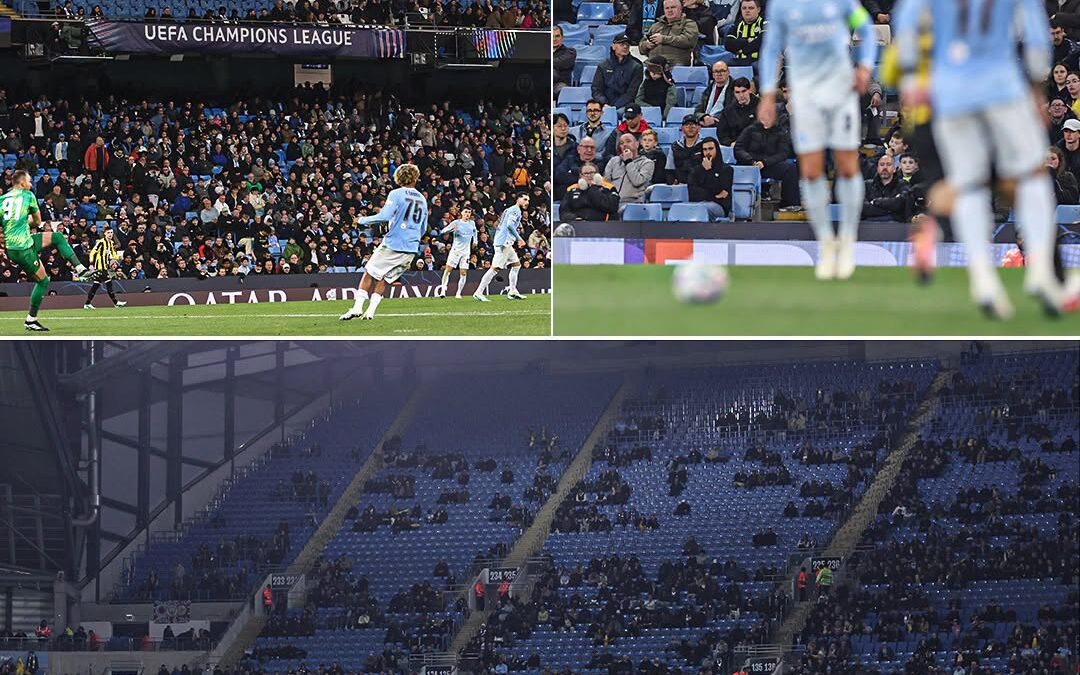
Manchester City’s Champions League Clash at the Etihad Draws Attention as Stadium Appears Far From Full
Manchester City’s Champions League clash at the Etihad Stadium has sparked discussion among football fans after images appeared to show a number of empty seats inside the ground ahead of kick-off.
Manchester City are accustomed to competing in front of large crowds, particularly on European nights when the atmosphere can play an important role. However, the latest images from the Etihad appeared to show that the stadium was not completely full, prompting questions about attendance and the level of support for the fixture.
Empty Seats Catch the Attention of Fans
The Etihad Stadium has become one of English football’s most recognisable venues, hosting some of Manchester City’s biggest domestic and European matches.
Yet, as supporters looked at the scenes surrounding the Champions League fixture, several sections appeared to have noticeable gaps. The sight quickly attracted attention, especially given the importance of European competition to a club that regularly targets the biggest trophies.
For some observers, the empty seats raised questions about ticket demand and whether the match had generated the same level of excitement as some of City’s previous Champions League encounters.
However, stadium images taken shortly before kick-off do not necessarily provide a complete picture of final attendance. Late arrivals, people still entering the ground and seats that remain unoccupied for other reasons can all affect how full a stadium looks at a particular moment.
Why Might the Etihad Have Empty Seats?
There are several possible explanations for the scenes at the Etihad, although the precise reasons cannot be established from photographs alone.
Ticket prices, the timing of the fixture, travel arrangements and the identity of the opposition can all influence attendance at European matches.
Midweek fixtures can also present logistical challenges for supporters who must travel long distances or balance football with work and family commitments.
Additionally, the difference between tickets sold and spectators physically inside the stadium at kick-off can affect the visual impression of attendance.
Without official attendance figures or further information from the club, it would be premature to conclude that a lack of interest was responsible for the apparent gaps.

Manchester City Still Have High Expectations
Despite the discussion surrounding the crowd, Manchester City’s ambitions in the Champions League remain unchanged.
The club have established themselves among Europe’s leading teams under Pep Guardiola, winning the competition in 2023 and regularly reaching the latter stages of major tournaments.
Supporters expect City to compete for trophies, and the Etihad has witnessed numerous memorable European nights in recent years.
A quieter-looking stadium does not automatically reflect the commitment of the fanbase, nor does it necessarily indicate a wider problem with the club’s popularity.
Nevertheless, the atmosphere created by supporters remains an important part of the Champions League experience, particularly when matches become tense and players need encouragement from the stands.
The Bigger Picture Behind the Etihad Images
The apparent empty seats have provided a talking point, but the wider context matters.
A photograph captures only one moment in time. Official attendance figures, ticket availability and images taken later in the match would provide a clearer understanding of how many supporters attended and how full the stadium ultimately became.
For Manchester City, the priority remains delivering performances on the pitch and progressing in Europe’s premier club competition.
The scenes at the Etihad may have surprised some observers, but whether they reflect a genuine attendance concern or simply the timing of the images remains unclear. Until official figures provide greater clarity, the empty seats should be treated as an observation rather than proof of declining support.
You Might Also Enjoy



Manchester United finalising deal to appoint Mauricio Pochettino as Carrick replacement

Single Dad Took Two Bullets Saving the Army General’s Daughter — “Move, I’ll Handle This!”

They Tried to Take the Stray Puppy—Then the Quiet Nurse Realized Why the K9 Needed Him



