He Left His Wheelchair-Bound Wife for Her Best Friend — A Year Later, She Walked Into His Boardroom
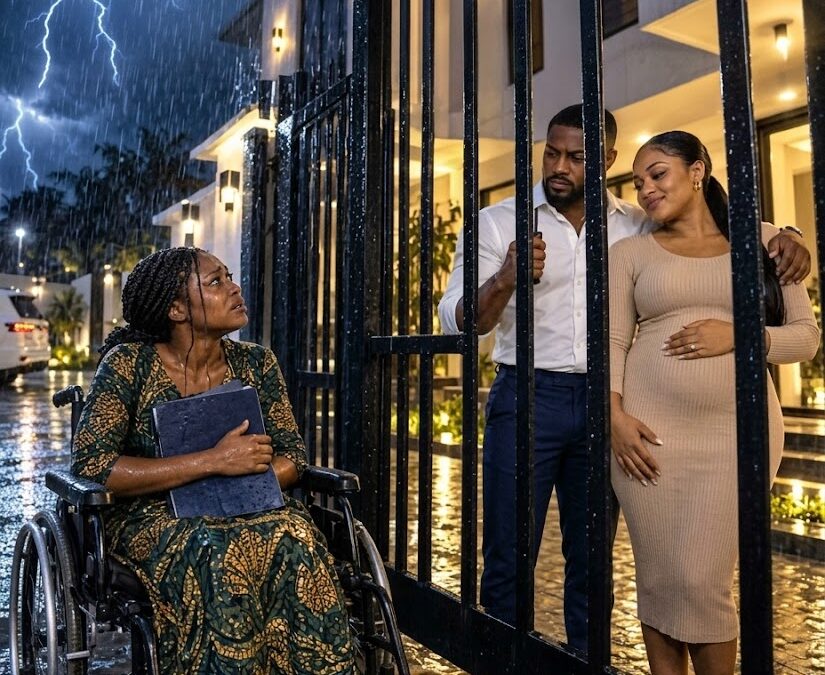
A powerful story of betrayal, heartbreak, hidden strength, and a woman who returned not to beg for love—but to show the world what her husband had thrown away.
Chapter 1: The Wife He Was Ashamed Of
The night Alexander Sterling abandoned his wife, rain poured over Manhattan like the sky itself was mourning her.
Inside a luxurious penthouse overlooking Central Park, thirty-four-year-old Victoria Sterling sat in her wheelchair, staring at the man she had loved for seven years.
Alexander stood before her in a perfectly tailored black suit, adjusting his expensive watch. Beside him stood Vanessa Cole, Victoria’s best friend since college.
Vanessa wore a red silk dress.
On her finger glittered a diamond ring Victoria had never seen before.
Victoria stared at it.
Then she looked at Alexander.
“Is that what I think it is?”
Neither answered.
Her heart began pounding.
“Alexander, please tell me I’m misunderstanding.”
Alexander sighed impatiently.
“Victoria, don’t make this more difficult than it needs to be.”
She gripped the arms of her wheelchair.
“More difficult? You’re standing in our home with my best friend wearing a ring. What exactly am I supposed to think?”
Vanessa lowered her eyes, pretending to be uncomfortable.
“Victoria, I never wanted things to happen this way.”
Victoria turned toward her.
“You told me you loved me like a sister.”
“I do care about you.”
“Then why are you standing beside my husband?”
Vanessa had no answer.
Alexander walked to the bar and poured himself a glass of whiskey.
“I’m leaving, Victoria.”
The words were so casual that she initially thought she had misheard him.
“Leaving where?”
“This marriage.”
She stared at him.
For seven years, Victoria had stood beside Alexander through everything. When his business had nearly collapsed, she had sold her inherited jewelry to help him cover the company’s debts. When investors refused to trust him, she had used her family’s connections to secure his first major contract.
She had believed they were building an empire together.
Then, eighteen months earlier, a terrible car accident had left her unable to walk.
The doctors had told her that rehabilitation might improve her mobility, but recovery would take time and the outcome remained uncertain.
Alexander had changed almost overnight.
At first, he had been attentive.
Then he became distant.
He stopped accompanying her to therapy appointments. He complained about the time her care required. He began working late and spending weekends away.
And now he was standing in front of her, preparing to leave her for the one person she had trusted more than anyone.
“Because of the wheelchair?” Victoria whispered.
Alexander looked away.
“I didn’t sign up for this kind of life.”
Victoria felt something inside her collapse.
“This kind of life?”
She gestured toward the wheelchair.
“You mean me?”
“I mean the situation! Everything has changed. I have responsibilities, a company to run, and a future to think about.”
“And I don’t?”
He said nothing.
Victoria’s eyes filled with tears.
“When your company was losing money, did I walk away? When you had nothing but an idea and a borrowed office, did I tell you that your problems were too much for me?”
Alexander’s jaw tightened.
“That’s different.”
“How?”
“Because I can’t keep living like this!”
His voice echoed through the penthouse.
For several seconds, neither spoke.
Then Victoria looked at Vanessa.
“How long?”
Vanessa swallowed.
“Victoria—”
“How long have you been sleeping with my husband?”
Vanessa’s eyes flickered toward Alexander.
That tiny movement was enough.
Victoria closed her eyes.
She didn’t need an answer anymore.
The betrayal had begun long before tonight.
Alexander placed a folder on the coffee table.
“I’ve arranged the divorce papers. My lawyers will contact you about the financial details.”
Victoria stared at the folder.
“You prepared everything.”
“Yes.”
“You planned to leave me.”
“I’ve made my decision.”
She looked at the man she had once trusted with every part of her life.
“Alexander, look at me.”
He reluctantly turned.
“Do you remember what you promised me when we got married?”
He said nothing.
“You told me that if one of us ever fell, the other would be there to help us stand again.”
Alexander’s expression hardened.
“People change, Victoria.”
She nodded slowly.
“Yes. They do.”
Vanessa moved toward the door.
Alexander followed her.
Just before leaving, he turned back.
“I’ll make sure you’re financially comfortable. You won’t have to worry about money.”
Victoria gave a broken laugh.
“You think money is what I’m worried about?”
He didn’t answer.
The door closed.
And for the first time since the accident, Victoria allowed herself to cry without trying to hide it.
She cried for her marriage.
For the years she had sacrificed.
For the best friend who had betrayed her.
And for the man who had once held her hand and promised never to let go.
Outside, the rain continued to fall.
Inside, Victoria Sterling sat alone in a penthouse that suddenly felt like the loneliest place on earth.
She believed her life had ended that night.
She had no idea that it was only the beginning.
Chapter 2: The Letter Her Husband Never Read
Three weeks after Alexander left, Victoria moved into a modest apartment overlooking the Hudson River.
She refused the luxury apartment Alexander’s lawyers had offered to rent for her.
She refused his monthly allowance.
And she refused to let him turn their marriage into a transaction.
The only things she took were her clothes, a few photographs, her mother’s old fountain pen, and a leather notebook filled with plans for a business she and Alexander had once dreamed of building together.
Victoria had studied architecture before marrying him.
She had always loved designing accessible homes and public spaces—places where people with disabilities could live independently without feeling as though the world had forgotten them.
After the accident, she had abandoned that dream.
Alexander had told her that she needed to focus on recovering.
At first, she believed he was protecting her.
Later, she realized he had stopped believing in her.
One evening, while unpacking her belongings, Victoria discovered an envelope tucked inside the notebook.
It was a letter she had written to Alexander shortly after the accident.
She had never given it to him.
With trembling fingers, she unfolded it.
My darling Alexander,
I know things are different now. I know you are frightened, even when you pretend not to be.
I’m frightened, too.
Some days, I wake up and forget what happened. Then I try to stand, and the truth comes rushing back.
I don’t know when I’ll walk again. The doctors don’t know either.
But I want you to know that I am still the woman who loved you before the accident. I am still the woman who believed in your dreams. I am still the woman who would have stood beside you if the whole world had turned against you.
Please don’t look at me and see only what I’ve lost.
Look at me and remember who I am.
If I never walk again, I hope you will still hold my hand.
And if I do walk again, I hope it will be because I found the strength to do it for myself.
With all my love,
Victoria.
She read the letter twice.
Then she folded it carefully and placed it back in the envelope.
Alexander had never read those words.
Perhaps he never would.
Victoria wiped her eyes and looked around her new apartment.
It was small, but the doorways were wide enough for her wheelchair. The kitchen had been adapted for her needs, and sunlight streamed through the windows in the afternoon.
For the first time in months, she felt that the space belonged entirely to her.
She rolled toward her desk, opened her laptop, and searched for information about starting a design company.
She had little money compared with Alexander.
She had no large office, no influential husband, and no team of executives.
But she had something he had forgotten she possessed.
A mind.
A vision.
And a lifetime of experience understanding what people needed when the world wasn’t designed for them.
Victoria opened a blank document.
At the top, she typed a name.
EVERGREEN ACCESS DESIGN.
Then she began to work.
Chapter 3: The Stranger Who Saw Her Potential
Six months later, Victoria sat in a small rehabilitation center reviewing architectural drawings when an elderly man approached her table.
He wore a charcoal suit and carried a worn leather briefcase.
“Excuse me,” he said. “Are you the designer who created the new accessible housing proposal?”
Victoria looked up.
“Yes. I’m Victoria Sterling.”
“Richard Hayes.”
He extended his hand.
She shook it.
Richard was a retired property developer who had spent forty years building residential communities across the United States. He had recently begun funding projects designed to make housing more accessible and affordable.
“I’ve been reviewing your proposal,” he said. “It’s remarkable.”
Victoria smiled politely.
“Thank you.”
“Why haven’t you built it?”
She glanced at the papers.
“Because ideas require money, and investors tend to prefer people with established companies.”
Richard pulled out a chair.
“Have you approached any?”
“Several. Most stopped responding when they learned my company was new. One told me I should consider consulting instead of trying to build an actual business.”
Richard frowned.
“Did he say that because of your experience or because you use a wheelchair?”
Victoria hesitated.
“I can’t prove why he said it.”
“Then let’s focus on what we can prove. Your design reduces unnecessary construction costs, makes apartments easier to navigate, and allows residents to remain independent as their needs change.”
He tapped the plans.
“That’s a business proposition, Ms. Sterling. Not a charitable request.”
Victoria looked at him with renewed interest.
Richard continued.
“I’d like to fund a pilot project. Twelve accessible apartments, designed according to your plans. If it succeeds, we’ll discuss expanding it.”
Victoria’s heart raced.
“You’re serious?”
“I don’t make investment offers as a hobby.”
She laughed for the first time in weeks.
Richard smiled.
“One condition.”
Her expression grew cautious.
“What is it?”
“You run the project. I will provide capital and guidance, but I won’t make decisions about the design without consulting you.”
Victoria studied him.
“Why?”
“Because you’re the expert. And because I’ve spent too many years watching talented people get ignored simply because they don’t fit someone else’s idea of leadership.”
She looked down at her drawings.
For months, she had been trying to convince people that her disability did not erase her abilities.
Richard was the first investor who seemed more interested in her work than her personal circumstances.
She extended her hand.
“Let’s build something.”
Richard shook it.
“That’s what I was hoping you’d say.”
That night, Victoria stayed awake until two in the morning, reviewing budgets and drafting timelines.
She was exhausted.
She was frightened.
And for the first time since Alexander had left, she was excited about the future.
Chapter 4: The Woman Who Refused to Be Pitied
The first year of Evergreen Access Design was brutal.
Victoria worked from her apartment, meeting contractors over video calls and traveling to construction sites whenever she could arrange accessible transportation.
Some suppliers underestimated her.
Others spoke to her assistant instead of addressing her directly.
One contractor repeatedly ignored her instructions, assuming she would eventually accept whatever he delivered.
She didn’t.
When the contractor installed a bathroom layout that failed to meet the project’s accessibility specifications, Victoria rejected the work.
“You approved the drawings,” he complained.
“And you failed to follow them.”
“We can fix it later.”
“No,” Victoria replied. “You’ll fix it now.”
He laughed.
“You’re making this unnecessarily difficult.”
Victoria met his gaze.
“Accessibility isn’t decoration. It determines whether someone can enter their own home, use their bathroom, and live with dignity. If you can’t understand that, you’re working on the wrong project.”
The contractor stared at her.
Then he picked up his plans and left.
Richard, who had been listening from the doorway, smiled.
“That was expensive courage.”
Victoria sighed.
“It was an expensive mistake. Courage would have been making sure he never had the chance to make it.”
Richard laughed.
“You’re going to do very well.”
The project took nine months longer than expected.
There were permit delays, rising material costs, and an investor who withdrew at the last minute.
Victoria nearly gave up twice.
But she didn’t.
The twelve apartments were completed the following spring.
They included step-free entrances, adjustable kitchen counters, accessible bathrooms, and layouts that allowed residents to move comfortably through their homes.
The first residents moved in during April.
One of them was a retired teacher named Mrs. Bennett, who had used a wheelchair for fifteen years.
On the day she received her keys, she rolled through the front door and stopped in the middle of her new living room.
She looked around.
Then she began to cry.
Victoria hurried toward her.
“Are you all right?”
Mrs. Bennett laughed through her tears.
“I can reach the kitchen cabinets.”
She pointed toward the counter.
“I can turn around in my bathroom without hitting my knees. I can open my own front door without asking someone to help me.”
She looked at Victoria.
“Do you understand what that means?”
Victoria felt her own eyes fill.
“Yes.”
Mrs. Bennett reached for her hand.
“You didn’t just design an apartment. You gave me part of my life back.”
That evening, photographs from the project appeared in local newspapers.
The headline read:
LOCAL DESIGNER TRANSFORMS ACCESSIBLE HOUSING—AND CHALLENGES THE INDUSTRY.
Victoria stared at the article on her laptop.
For the first time, people were talking about her work.
Not her divorce.
Not her wheelchair.
Not the billionaire who had abandoned her.
Her work.
She leaned back in her chair and smiled.
She was no longer trying to prove that she deserved to be loved.
She was building a life that she loved.
Chapter 5: The Husband Who Thought She Would Disappear
While Victoria was building her company, Alexander Sterling’s life looked perfect from the outside.
His technology firm, Sterling Global, had expanded into new markets. Business magazines praised his leadership. He attended charity galas with Vanessa, who had become his fiancée.
The couple appeared together in photographs beneath headlines celebrating their engagement.
Alexander told himself he had made the right decision.
He had a beautiful partner, a growing company, and a future that no longer revolved around hospital appointments and rehabilitation schedules.
Yet something had changed.
Vanessa was not the woman he had imagined.
She loved luxury, attention, and the privileges that came with being associated with a billionaire.
She disliked discussing business unless it involved publicity.
She became irritated when Alexander worked late but demanded expensive trips whenever he had a free weekend.
And she had little patience for anyone who needed help.
One evening, Alexander mentioned that his company was considering a partnership with a new accessible housing developer.
Vanessa barely looked up from her phone.
“Why would we invest in that?”
“The project has potential.”
“Then hire someone to manage it. Why waste time on a small housing company?”
Alexander frowned.
“Not every worthwhile business is enormous on day one.”
Vanessa smiled.
“Of course. But you didn’t become successful by taking on other people’s problems.”
The words reminded him of something he had once said to Victoria.
I didn’t sign up for this kind of life.
For a moment, he felt a strange discomfort.
Then he pushed the thought away.
Victoria had probably moved on.
Perhaps she had found a comfortable routine.
Perhaps she was living quietly on the settlement his lawyers had arranged.
He didn’t know.
He hadn’t asked.
He had convinced himself that distance was kindness.
Then, one Monday morning, his executive assistant entered his office carrying a folder.
“Mr. Sterling, we have a problem.”
Alexander looked up.
“What now?”
“The board has requested an extraordinary meeting. They’re reviewing our proposed acquisition of Northstar Properties.”
“Why?”
“The company has a new strategic investor. They’ve requested changes to the deal, and the board wants to hear the investor’s position directly.”
Alexander frowned.
“Who is it?”
His assistant opened the folder.
“Evergreen Access Design, in partnership with Hayes Development Group.”
Alexander had never heard of Evergreen.
“Who runs it?”
“Victoria Sterling.”
For a moment, the office seemed to tilt.
Alexander stared at the name.
“That’s impossible.”
His assistant hesitated.
“Sir, the meeting is scheduled for Thursday. The investor’s representative has confirmed attendance.”
Alexander slowly closed the folder.
Victoria.
His Victoria.
The woman he had left sitting in a wheelchair, crying in their penthouse.
The woman he had assumed would never recover enough to build a life without him.
He looked toward the window.
For the first time in a year, he wondered whether leaving her had been the biggest mistake of his life.
Chapter 6: The Invitation That Changed Everything
The boardroom at Sterling Global occupied the top floor of a glass skyscraper in Manhattan.
On Thursday morning, Alexander arrived early.
He reviewed the acquisition documents twice, questioned his legal team, and demanded an updated report on Evergreen Access Design.
The information unsettled him.
Evergreen had completed three successful accessible housing projects.
Its designs had won industry recognition.
Its latest development partnership involved several major property investors.
And Victoria had become its founder and chief executive officer.
Alexander read the reports again.
He remembered her sitting at their dining table, sketching ideas for accessible apartments while he complained about the cost of her prototypes.
He remembered telling her that her plans were unrealistic.
He remembered promising to help her build a business after she recovered.
Then he remembered leaving her.
A knock interrupted his thoughts.
His assistant stepped inside.
“Everyone is here, sir.”
Alexander stood.
“Has Ms. Sterling arrived?”
“Yes.”
He straightened his jacket.
“Bring her in.”
The board members settled into their seats.
The chief financial officer opened his laptop.
The company’s legal counsel arranged a stack of documents.
Then the boardroom doors opened.
A woman entered in a tailored ivory suit.
Her dark hair was pinned neatly at the back of her head. A slim leather portfolio rested on her lap.
She moved forward in a sleek, modern wheelchair designed for both comfort and independent mobility.
Alexander stopped breathing.
Victoria.
She looked different.
Not because she had changed beyond recognition, but because she carried herself with a calm confidence he had never seen before.
There was no fear in her eyes.
No desperation.
No sign that she had come seeking his approval.
She greeted the board members, exchanged brief introductions, and positioned herself at the head of the conference table.
Then she looked at Alexander.
“Good morning, Mr. Sterling.”
Her voice was calm and professional.
Alexander swallowed.
“Victoria.”
She gave him a polite nod.
“Thank you for inviting Evergreen Access Design to this meeting.”
He stared at her.
“I didn’t know you were involved in this acquisition.”
“You would have known if you had reviewed the investor documentation carefully.”
Several board members glanced at one another.
Alexander felt heat rise in his face.
Victoria opened her portfolio.
“Shall we begin?”
For the next twenty minutes, she presented a detailed analysis of Northstar Properties.
She explained how Sterling Global’s proposed acquisition undervalued several assets, overlooked maintenance liabilities, and failed to account for the growing demand for accessible residential developments.
She didn’t raise her voice.
She didn’t mention their marriage.
She didn’t refer to the night he had left her.
She simply dismantled his proposal with facts.
One board member leaned forward.
“Ms. Sterling, your projections suggest that redesigning these properties could improve long-term occupancy and reduce certain operating costs. Can you substantiate those figures?”
“Certainly,” Victoria replied.
She displayed a spreadsheet.
“Our estimates are based on comparable developments, projected renovation costs, and occupancy data. We’ve also included conservative and high-cost scenarios.”
The financial director studied the figures.
After several minutes, he looked at Alexander.
“She’s right about the maintenance liabilities.”
Another director nodded.
“And the accessibility upgrades could create a competitive advantage.”
Alexander stared at the screen.
He had spent years believing Victoria needed him to make decisions.
Now she was the person teaching his board how to make a better one.
Victoria closed her presentation.
“Evergreen is prepared to participate in the acquisition, provided the final agreement protects the project’s long-term viability and gives our team authority over the accessibility standards.”
The chairman of the board smiled.
“That seems reasonable.”
He turned to Alexander.
“Your response?”
Alexander looked at his wife.
Or rather, his former wife.
The woman he had once promised to stand beside.
He opened his mouth.
But for the first time in years, he had no answer.
Chapter 7: “You Look Surprised to See Me”
After the meeting, the board members filed out.
Victoria gathered her documents.
Alexander remained standing beside the window, watching her.
Finally, he spoke.
“Can we talk?”
Victoria closed her portfolio.
“About the acquisition?”
“No. About us.”
She looked at him for several seconds.
Then she replied, “There is no us, Alexander.”
The words were not cruel.
That made them hurt even more.
He pulled out a chair.
“Please. Just five minutes.”
Victoria considered leaving.
Then she nodded toward the empty seats.
“Five minutes.”
Alexander sat across from her.
“I didn’t know you’d built all this.”
“You never asked.”
“I thought—”
“You thought I would disappear.”
He looked down.
“I thought you needed time to recover.”
Victoria let out a quiet breath.
“Don’t rewrite what happened.”
He looked up.
She continued.
“You told me you didn’t want that kind of life. You said my disability had changed everything. You left me with divorce papers and told me you’d make sure I had enough money.”
Alexander’s face tightened.
“I was overwhelmed.”
“So was I.”
“I didn’t know how to handle what happened.”
“Neither did I. But I didn’t abandon you.”
He stared at the table.
Victoria’s voice remained steady.
“I spent months learning how to live again. I had to relearn ordinary things. I had to find a new home, rebuild my confidence, and figure out who I was without the person I thought would always be beside me.”
She paused.
“And while I was doing that, I built a company.”
Alexander looked at her.
“Are you happy?”
It was the wrong question.
Not because she wasn’t happy, but because he asked it as though her happiness were a verdict on his own life.
Victoria thought for a moment.
“I’m proud of myself.”
He swallowed.
“That’s not what I asked.”
“It’s the answer I’m giving you.”
Silence filled the room.
Then Alexander said the words he had been rehearsing since she entered the boardroom.
“I’m sorry.”
Victoria looked at him.
“I believe you may regret what happened.”
“I do regret it.”
“But regret isn’t the same as understanding.”
He flinched.
She continued.
“You regret losing the woman who supported you. You regret seeing me succeed without you. You may even regret the way you treated me. But I don’t know whether you understand what it meant to be abandoned when I was at my most vulnerable.”
Alexander’s eyes filled.
“I loved you.”
Victoria looked away briefly.
“Perhaps you did.”
He reached toward her hand.
She moved hers back.
“Please don’t.”
He froze.
Victoria took a breath.
“I came here to conduct business. I didn’t come to punish you, and I didn’t come to prove that I can walk again.”
Alexander glanced involuntarily at her wheelchair.
She noticed.
“I still use a wheelchair, Alexander. My life has improved, but I haven’t suddenly become a different person. I don’t need to stand up to prove that I’m strong.”
His face crumpled.
“I know.”
“No,” she replied quietly. “You’re only beginning to understand.”
She placed her portfolio on her lap.
“Our lawyers will handle the acquisition. I expect the same professionalism from you that I would expect from any other business partner.”
Then she turned toward the door.
Alexander stood abruptly.
“Victoria, wait.”
She stopped but didn’t turn around.
“Is there any chance we could start over?”
For several seconds, she said nothing.
Then she looked back at him.
“Alexander, I spent a year trying to rebuild a life I thought I had lost. I didn’t do all that work so I could return to the person who convinced me I was no longer worth standing beside.”
She gave him a small, sad smile.
“I hope you become a better man. But that is no longer my responsibility.”
And she left.
Alexander stood alone in the boardroom, listening to the sound of the door closing.
The same way he had left her a year earlier.
Only this time, he was the one who had been abandoned by the future he imagined.
Chapter 8: The Best Friend Who Wanted Everything
Vanessa was waiting at Alexander’s penthouse when he returned that evening.
She was wearing a diamond necklace he had bought her for their engagement.
“You’re late,” she complained.
Alexander loosened his tie.
“We had a board meeting.”
“Did the acquisition go through?”
“Not yet.”
She frowned.
“Then what was the problem?”
He looked at her.
“Victoria.”
Vanessa’s expression changed instantly.
“What about her?”
“She’s the head of Evergreen Access Design. Her company is part of the investment group.”
Vanessa laughed in disbelief.
“Victoria? The woman who couldn’t even get out of bed without help?”
Alexander’s eyes hardened.
“Don’t talk about her like that.”
Vanessa stared at him.
“Excuse me?”
“She built a successful company. She did it without me. And she walked into that boardroom knowing more about the deal than half the people sitting there.”
Vanessa’s face turned cold.
“Well, congratulations to her. What does that have to do with us?”
Alexander didn’t answer.
Vanessa moved closer.
“You’re not thinking about getting back together with her, are you?”
He looked away.
That was enough.
Vanessa’s expression twisted.
“After everything we did to be together?”
Alexander turned sharply.
“Everything we did?”
“You chose me!”
“I know what I chose.”
“Then act like it!”
He stared at her.
For the first time, he heard the ugliness beneath her confidence.
She had not asked whether Victoria was doing well.
She had not expressed surprise at her achievements.
She had only been angry that Victoria’s success had become a threat to her own position.
Alexander suddenly remembered the way Vanessa had spoken about his wife during the final months of their marriage.
She needs too much attention.
You can’t spend your whole life taking care of someone.
You deserve someone who makes your life easier.
He had mistaken Vanessa’s willingness to agree with him for understanding.
Now he realized she had simply told him what he wanted to hear.
Vanessa folded her arms.
“Don’t tell me you’re feeling guilty. You made a choice. You can’t undo it.”
Alexander looked at her for a long time.
“You’re right.”
She smiled triumphantly.
Then he continued.
“I made a choice. And now I have to live with it.”
Her smile disappeared.
“What does that mean?”
“It means I need time to think.”
Vanessa stared at him.
“You cannot be serious.”
“I am.”
She grabbed her purse and stormed toward the bedroom.
Alexander remained in the living room.
For the first time, he wasn’t trying to decide which woman he wanted.
He was trying to understand what kind of man he had become.
And he didn’t like the answer.
Chapter 9: The Secret Victoria Had Kept
Two months after the boardroom meeting, Evergreen Access Design secured its largest contract yet.
The company would lead the redevelopment of three aging residential towers into accessible, energy-efficient communities.
The project received national attention.
Victoria appeared on the cover of a business magazine beneath the headline:
THE CEO REDEFINING ACCESSIBLE HOUSING.
She didn’t celebrate with champagne or a lavish party.
Instead, she invited her small team to dinner at a neighborhood restaurant.
Richard raised a glass.
“To Victoria Sterling. The only person I know who can make a room full of investors argue about bathroom dimensions for forty-five minutes.”
Everyone laughed.
Victoria smiled.
“You’re welcome.”
Later that evening, her assistant, Emily, approached her with a concerned expression.
“There’s something you should know.”
Victoria set down her glass.
“What is it?”
“Alexander’s company has been struggling with the Northstar acquisition. Their board is divided, and several investors are questioning his judgment.”
Victoria frowned.
“That’s unfortunate. But it’s not our problem.”
“I agree. I just thought you should know because his lawyers contacted ours.”
“About what?”
“They want to renegotiate part of the agreement.”
Victoria nodded.
“Schedule a meeting. We’ll review the request on its merits.”
Emily hesitated.
“There’s something else. Alexander asked whether you would be willing to meet him privately.”
Victoria looked out the restaurant window.
A year ago, that request would have kept her awake all night.
Now it felt like a question she could answer without losing herself.
“Tell him I’ll meet him if the discussion concerns the contract. Otherwise, there’s nothing to discuss.”
Emily nodded.
Then she hesitated again.
“Victoria, can I ask you something personal?”
“Of course.”
“Do you ever wish you’d tried harder to save your marriage?”
Victoria was silent for a moment.
Then she smiled faintly.
“I tried very hard to save my marriage. I tried so hard that I almost forgot I was allowed to save myself, too.”
Emily lowered her eyes.
Victoria continued.
“I loved Alexander. That part was real. But love isn’t a reason to accept being treated as though your life has become a burden.”
She touched the edge of her notebook.
“I don’t hate him. I don’t need to. I’ve learned that I can wish someone well without giving them another chance to hurt me.”
Emily nodded slowly.
Victoria looked back toward the table, where her colleagues were laughing.
“Besides, I have a company to run.”
She smiled.
“And we’re only getting started.”
Chapter 10: The Final Meeting
Six months later, Sterling Global and Evergreen Access Design met to finalize a major redevelopment agreement.
This time, Alexander arrived with a different attitude.
He listened.
He asked questions.
He accepted criticism without turning it into a personal battle.
And when Victoria challenged a proposed budget cut that would have reduced accessibility features, he supported her position.
“The changes stay,” he told the board. “If we’re going to build these communities, we’re going to build them properly.”
Victoria looked at him briefly.
She didn’t smile, but she acknowledged the decision with a nod.
The agreement was signed that afternoon.
As the other executives left, Alexander approached her.
“Victoria, may I say something?”
She closed her folder.
“Go ahead.”
“I want you to know that I’ve started seeing a therapist.”
She looked at him, surprised.
He continued.
“I’ve been trying to understand why I reacted the way I did after your accident. I told myself I was overwhelmed, but that doesn’t excuse what I did.”
Victoria listened without interrupting.
“I treated your disability as though it had taken something away from me. I made your pain about my inconvenience. And when I couldn’t control the situation, I chose to leave.”
He swallowed.
“I can’t change that. But I’m trying to understand it so I don’t become that person again.”
Victoria studied him.
For the first time, his apology sounded less like an attempt to get something back and more like an admission of responsibility.
“I’m glad you’re getting help,” she said.
Alexander nodded.
“I know I have no right to ask you for anything. I just wanted you to know.”
She considered him for a moment.
“That’s the first apology you’ve given me that doesn’t ask me to make you feel better.”
His eyes filled.
“Thank you.”
Victoria adjusted her portfolio.
“I hope you continue doing the work, Alexander. Not for me. For yourself, and for the people you may love in the future.”
He nodded.
Then he asked one final question.
“Are you ever going to forgive me?”
Victoria looked toward the windows.
The city stretched out beneath them, bright and endless.
“I don’t know what forgiveness will look like for me,” she said honestly. “Maybe someday I’ll remember what happened without feeling the pain of it. Maybe I already have, in some ways.”
She turned back toward him.
“But forgiveness doesn’t mean returning to the marriage. And it doesn’t mean pretending what happened was acceptable.”
Alexander nodded slowly.
“I understand.”
For once, Victoria believed that he was trying to.
She extended her hand.
“Good luck with the company, Alexander.”
He shook it.
“Good luck with everything, Victoria.”
She turned toward the elevator.
This time, he didn’t ask her to stay.
And she didn’t look back.
Epilogue: The Woman Who Stood Tall Without Standing Up
Three years later, Victoria Sterling stood—figuratively, and proudly—before an audience of hundreds at an international business summit.
Her company had expanded to twelve cities.
Evergreen Access Design had helped create thousands of accessible homes, redesigned public buildings, and trained developers to treat accessibility as a fundamental part of good design rather than an afterthought.
Victoria still used her wheelchair.
Some days were easier than others.
She continued rehabilitation because it helped her maintain her strength and independence, not because she believed her worth depended on walking again.
Her life had become fuller than she had imagined during those dark months after the divorce.
She had friends who respected her.
Colleagues who trusted her judgment.
A business she had built with her own hands.
And a quiet apartment filled with books, plants, and sunlight.
At the summit, the host introduced her as one of the most influential leaders in accessible urban development.
When Victoria reached the stage, the audience rose to its feet.
She smiled, waited for the applause to fade, and began.
“People often ask me what the hardest part of rebuilding my life was.”
She paused.
“They expect me to talk about learning to live with a disability. And yes, that was difficult. There were days when I was frightened, frustrated, and exhausted.”
The room grew quiet.
“But the hardest part was realizing that someone I loved had decided my life was no longer worth sharing.”
She looked across the audience.
“For a long time, I thought I had to prove that I was still valuable. I thought success would make people regret underestimating me.”
She smiled gently.
“Eventually, I learned that I didn’t need to become successful to deserve respect. I deserved respect before I built a company, before I signed a contract, and before anyone applauded me.”
The audience listened in silence.
“My wheelchair didn’t destroy my marriage. My accident didn’t make me less worthy of love. The truth is that my husband and I faced a terrible change, and he chose to abandon me rather than face it together.”
She took a breath.
“His choice was painful. But it wasn’t the end of my story.”
The applause began before she had finished.
In the back of the room, Alexander Sterling stood among the guests.
He had come quietly, without informing her.
He listened to every word.
And when the audience rose, he rose with them.
Victoria saw him.
For a brief moment, their eyes met.
She gave him a polite nod.
Then she turned back to the audience.
Alexander understood.
She wasn’t trying to hurt him.
She wasn’t waiting for him to apologize again.
She had simply moved forward.
After the ceremony, a young woman approached Victoria.
“I’m a graduate student,” she said. “I use a wheelchair, and I’ve been afraid to apply for a leadership position at my company. I keep thinking people won’t take me seriously.”
Victoria reached for her hand.
“Apply.”
The young woman blinked.
“What if they reject me?”
“Then you’ll have an answer about that opportunity. You won’t have an answer about your worth.”
The young woman smiled through her tears.
“Thank you.”
Victoria watched her walk away.
Then she looked through the glass doors toward the city.
Once, she had believed her entire future depended on whether Alexander stayed.
Now she knew better.
She had lost a marriage.
She had lost a friend.
She had lost the life she thought she would have.
But she had not lost herself.
And that was the one thing no betrayal could take away.
Alexander had left his wheelchair-bound wife believing she would never stand on her own again.
A year later, she entered his boardroom as the one person he could no longer afford to underestimate.
But the greatest victory wasn’t the look on his face.
It wasn’t the company she built or the deals she signed.
It was the peace she found when she finally understood that she had never needed to walk away from her wheelchair to rise above the people who had hurt her.
She had only needed to stop letting them decide how far she could go.
THE END. ❤️🔥
You Might Also Enjoy


Manchester United finalising deal to appoint Mauricio Pochettino as Carrick replacement

Single Dad Took Two Bullets Saving the Army General’s Daughter — “Move, I’ll Handle This!”

They Tried to Take the Stray Puppy—Then the Quiet Nurse Realized Why the K9 Needed Him