Luis Enrique Defends Manchester City’s Achievements: “They Deserved to Win on the Pitch” — Now All Eyes Are on the Authorities
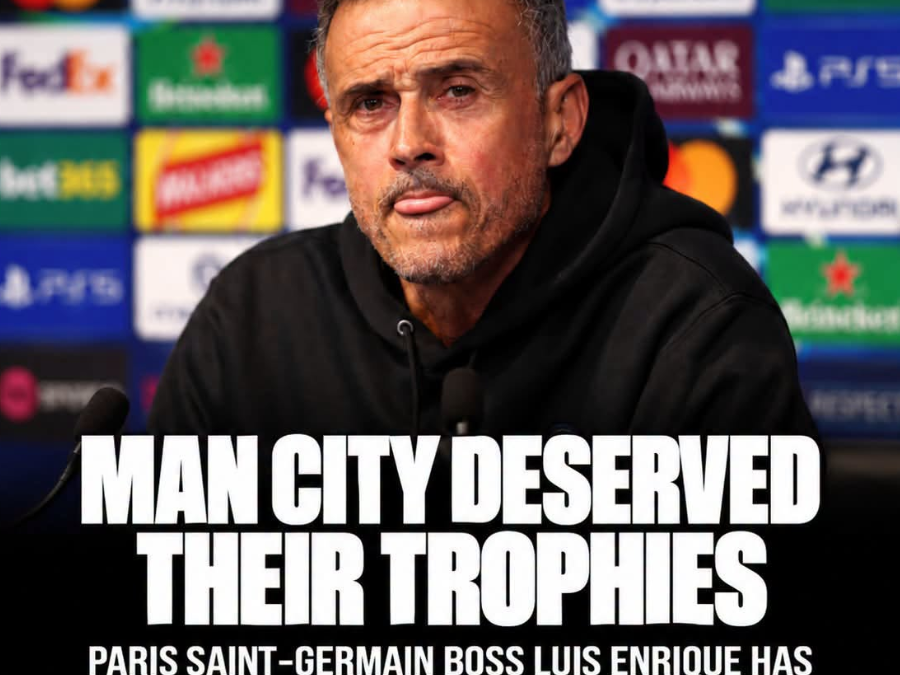
Luis Enrique has offered a measured response to the ongoing uncertainty surrounding Manchester City, expressing his hope that the club’s situation will be resolved positively while emphasizing that the team’s achievements on the pitch deserve recognition.
The Paris Saint-Germain manager praised what Manchester City have accomplished over recent years, pointing to their remarkable success and the trophies they have collected. However, he also acknowledged that the final outcome of the matter rests with the relevant authorities and the judge responsible for reaching a decision.
His comments have added another perspective to a discussion that continues to attract attention across European football, raising important questions about sporting achievement, accountability, and the relationship between success on the pitch and decisions made away from it.
Luis Enrique Recognizes Manchester City’s Achievements
Speaking about Manchester City’s situation, Luis Enrique made his position clear.
“I hope everything works out well for Manchester City because I think what they have done on the pitch has been incredible over the last few years and they certainly deserved to win on the pitch, all the trophies they have won,” he said.
The Spanish coach’s words reflect his appreciation for the level of football Manchester City have produced during one of the most successful periods in their history.
Under Pep Guardiola, City have established themselves as one of the dominant forces in English football, combining technical quality, tactical organization, and consistency to compete for major honours season after season.
Their achievements have included multiple Premier League titles, domestic cup victories, and the UEFA Champions League trophy in 2023. That European triumph completed a historic campaign in which City secured the treble of the Premier League, FA Cup, and Champions League.
For many observers, the team’s success has been built on an identifiable footballing philosophy. Guardiola’s emphasis on possession, positional discipline, intelligent movement, and collective pressing has helped City develop a distinctive style that has influenced teams across Europe.
Enrique’s remarks acknowledge the footballing quality behind those accomplishments. His statement that City deserved their trophies on the pitch highlights the distinction between evaluating a team’s sporting performances and determining the outcome of a legal or regulatory process.
However, recognizing a team’s performances does not, by itself, resolve any questions being considered by the relevant authorities.
“Now We Have to Wait” — Enrique Leaves the Final Decision to the Authorities
While Enrique praised Manchester City’s achievements, he was also careful not to prejudge the outcome of the ongoing proceedings.
“Now we have to wait to see what the authorities decide or the judge is going to say,” he added.
That part of his statement is particularly important. Rather than predicting the outcome or making definitive claims about the case, Enrique acknowledged that the decision belongs to the appropriate institutions.
In high-profile football disputes, public discussion can quickly become polarized. Supporters may focus on the trophies their teams have won, while critics may concentrate on allegations, regulations, and questions about competitive fairness.
But public opinion and an official ruling are not the same thing.
The relevant authorities must assess the evidence, apply the applicable rules, and reach their conclusions through the established process. Until an authoritative decision is issued, it is important to distinguish between allegations, procedural developments, and proven findings.
Enrique’s response reflects that distinction. He has expressed his hope for a positive outcome for City while recognizing that the final decision is not his to make.

Manchester City’s Success Under Pep Guardiola
To understand why the situation has attracted so much attention, it is worth considering the scale of Manchester City’s achievements over the past several years.
Guardiola’s arrival in 2016 marked the beginning of a period in which City developed into a highly consistent winning team. After adapting to English football, the club began collecting major trophies while establishing new standards for domestic performance.
The 2017–18 season was particularly significant, as City won the Premier League with a then-record 100 points. They followed that achievement with another league title in 2018–19, becoming the first men’s team to win all four major domestic English trophies across a single season.
City’s dominance continued in subsequent campaigns, including three consecutive Premier League titles from 2020–21 through 2022–23.
The crowning achievement came in June 2023, when City defeated Inter Milan in the Champions League final to secure the European trophy for the first time in their history. Combined with their domestic successes, that victory completed a treble that placed the team among the most celebrated sides of the modern era.
Those results explain why Enrique described the club’s performances as incredible.
Nevertheless, sporting achievements and compliance with football regulations are separate matters. A team’s success can be acknowledged while any outstanding legal or disciplinary questions are considered independently.
That distinction is essential to maintaining a fair discussion of the situation.
The Debate Over Sporting Merit and Accountability
Enrique’s comments touch on a broader question that frequently emerges when successful clubs face legal or regulatory scrutiny: how should football balance sporting achievement with accountability?
For supporters, trophies represent years of work by players, coaches, and staff. They recall decisive goals, difficult away victories, tactical adjustments, and moments that helped define a club’s history.
From that perspective, it is understandable that fans want the football played on the pitch to remain central to the conversation.
At the same time, professional football depends on rules intended to protect the integrity of competition. Clubs are expected to operate within the relevant sporting and financial regulations, and allegations of non-compliance must be assessed through the appropriate procedures.
These two principles are not necessarily incompatible.
Recognizing the quality of a team’s performances does not mean dismissing regulatory concerns. Equally, discussing an investigation does not automatically invalidate every sporting achievement associated with the club.
The crucial issue is the evidence and the conclusions reached by the competent authorities.
That is why the distinction in Enrique’s statement matters. He praised Manchester City’s football while leaving the final judgment to the institutions responsible for the case.
Why Luis Enrique’s Words Matter
Enrique is an experienced manager who understands the pressures of elite football. Having coached at Barcelona, Paris Saint-Germain, and the Spanish national team, he has operated in environments where results, recruitment, tactical decisions, and institutional scrutiny are constant features of the job.
His comments are notable because they recognize City’s sporting achievements without attempting to determine the outcome of the proceedings.
Rather than turning the issue into a confrontation between rival clubs, Enrique expressed a hope that the situation would be resolved well for Manchester City and then emphasized the need to wait for the official decision.
That approach leaves room for two considerations to coexist: respect for what a team has accomplished on the pitch and respect for the process through which outstanding questions must be resolved.
His remarks do not establish whether Manchester City will receive a favourable decision, nor do they settle the substance of any allegations. They are an expression of his view on the club’s footballing record and the importance of awaiting an authoritative outcome.
What Happens Next for Manchester City?
The next significant development will depend on the relevant authorities and the procedural timetable governing the case.
Until the outcome is officially established, speculation about possible consequences should be treated cautiously. The nature of any ruling, its reasoning, and any potential sporting or financial implications would need to be assessed once reliable details become available.
For Manchester City, the immediate challenge is to continue focusing on football while the wider situation remains a subject of public interest.
For supporters and observers, the priority should be to separate verified developments from rumours and to avoid treating an anticipated decision as though it has already been made.
Whatever the eventual outcome, the discussion is likely to remain an important moment in the wider conversation about football governance, financial regulation, and the responsibilities of elite clubs.
Final Verdict: Respect the Football, Wait for the Decision
Luis Enrique’s message is straightforward: Manchester City’s achievements on the pitch have been remarkable, and he hopes the situation works out well for the club. At the same time, he recognizes that the final decision belongs to the authorities and the judge involved.
His comments capture the tension at the heart of the debate. City’s trophies and performances are part of football history, while any unresolved regulatory questions must be addressed through the appropriate legal or sporting process.
Neither public praise nor public criticism can replace that process.
For now, the focus remains on the official decision and the facts established through it.
As Luis Enrique’s remarks suggest, Manchester City’s footballing achievements can be recognized while the wider case is left to the authorities to decide. ⚽
You Might Also Enjoy
Manchester United finalising deal to appoint Mauricio Pochettino as Carrick replacement

Single Dad Took Two Bullets Saving the Army General’s Daughter — “Move, I’ll Handle This!”

They Tried to Take the Stray Puppy—Then the Quiet Nurse Realized Why the K9 Needed Him