𝗕𝗥𝗘𝗔𝗞𝗜𝗡𝗚: UEFA have fined Manchester city player Enzo Fernandez £10,000 for intenationally pushing the referee against PSG at Etihad Stadium.
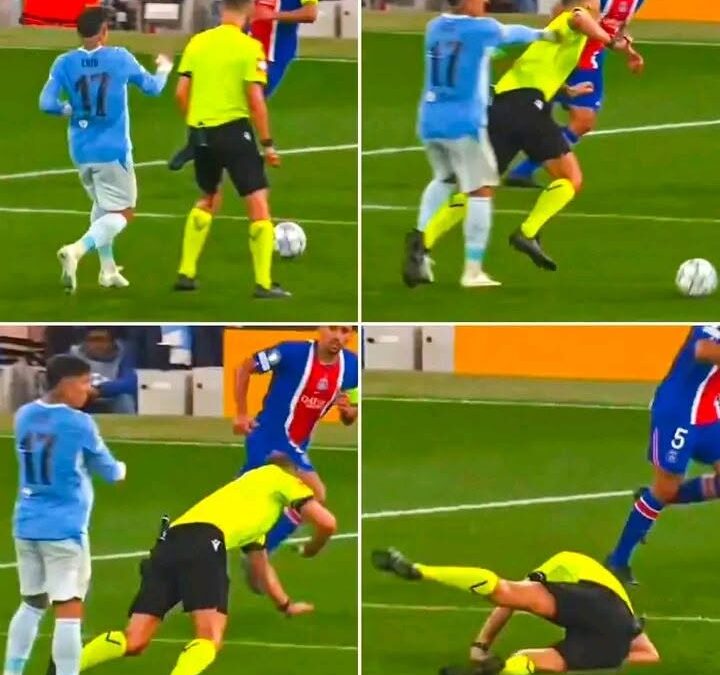
BREAKING: UEFA Fines Enzo Fernández £10,000 for Pushing Referee During Match Against PSG at Etihad Stadium
European football is abuzz with news that UEFA has reportedly fined Enzo Fernández £10,000 following a controversial incident during the match between Manchester City and Paris Saint-Germain at the Etihad Stadium. According to the circulating headline, the Argentinian midfielder is accused of deliberately pushing the referee, quickly making the incident a hot topic among fans.
Note: This is a story developed based on the headline you provided, not a verified news report. Enzo Fernández is currently known as a Chelsea player, so information regarding the club and the penalty needs to be verified before being published as factual.
A tense night of football at the Etihad Stadium
The Etihad Stadium is renowned for its passionate atmosphere during major European matches. When Manchester City faced Paris Saint-Germain, fan expectations reached their peak. Both teams boasted top players, fast-paced play, and ambitions to go deep in the continental competition.
From the very first minutes, the match was envisioned as a fierce battle in the midfield. Constant challenges ensued, players relentlessly pressured their opponents, and every referee decision could directly impact the outcome of the game.
In matches of such importance, emotions sometimes spiral out of control. A foul, a penalty call, or a yellow card could provoke a strong reaction from the players. That’s why referees must maintain composure and control of the game, regardless of pressure from players or spectators.
Controversial Situation
According to the scenario constructed from the title, the story centers on a tense situation between players and the referee. Following an on-field decision, disagreement allegedly escalated, leading to the alleged pushing of the referee involving Enzo Fernández.
If a player actually made intentional physical contact with the referee, this would be a far more serious issue than a typical verbal reaction. The referee is responsible for officiating the match, and any threatening or physically impactful behavior towards them can lead to disciplinary consequences.
However, it is necessary to distinguish between a heated reaction, an accidental collision, and intentional conduct. To reach an accurate conclusion, the disciplinary body needs to review match footage, the referee’s report, the player’s explanation, and other relevant evidence.
In modern football, short video clips can quickly spread on social media without fully capturing the context. A moment captured from one angle may not necessarily reflect the entire sequence of events. Therefore, waiting for official information is essential before concluding that any player has violated the rules.
Why is the £10,000 fine attracting attention?
The £10,000 figure in the headline has made the story particularly noteworthy. For a professional player competing at the highest level, this amount may not be the largest sum of money in their career. But the significance of a disciplinary penalty lies not only in its financial value.
More importantly, it sends a message to the entire football world: players must take responsibility for their actions, even when the match is taking place in the most tense atmosphere.
A disciplinary decision, if officially issued, can also affect a player’s personal image, relationship with fans, and how the media perceives them. Those considered professional role models always face higher expectations regarding emotional control and respect for the rules of the game.
However, it cannot be confirmed that UEFA has applied the £10,000 fine in this case without official announcement or confirmation from a reliable source.
UEFA and the principle of respecting referees
In UEFA competitions, referees play a central role in maintaining order and ensuring the game is played according to the rules. Players have the right to disagree with decisions, but their objections must be within permissible limits.
Actions such as insults, threats, shoving, or violent acts against referees can lead to various forms of disciplinary action, depending on the severity and applicable regulations.
Disciplinary measures may include warnings, disqualifications, suspensions, or fines. In serious cases, the competent authority may also consider additional penalties based on official reports and video evidence.
The goal of these regulations is not simply to punish an individual. They also aim to protect referees, maintain fairness, and prevent inappropriate behavior from becoming commonplace in football.
How will Enzo Fernández cope with the pressure?
Enzo Fernández is an Argentinian midfielder known for his passing ability, tempo control, and playmaking contributions. As a player at a high level, he often has to handle high-pressure situations where a single wrong decision can affect the entire team.
If a player is involved in a controversy related to a referee, the pressure from the media and fans can be immense. Every statement, reaction, and subsequent development can be scrutinized.
In the event of a genuine disciplinary incident, how the player reacts afterward is also crucial. Cooperating with the investigating authorities, providing a clear explanation, and demonstrating professionalism can help the public better understand the situation.
However, it should not be assumed that Enzo Fernández committed a foul or suffered specific consequences based solely on an unverified headline. A player should be judged based on evidence, not on accusations spread online.

Fan and Football Community Reactions
Stories involving referees often generate intense debate. Some fans may argue that the player is entirely responsible if they intentionally acted disrespectfully. Others want to know what happened beforehand and whether the referee’s decision contributed to the escalating tension.
Regardless of the perspective, it’s crucial not to equate protesting a decision with violence. Players can express frustration, but they are not allowed to use physical force to pressure the match official.
The debate also highlights the influence of social media on modern football. A sensational headline can be shared thousands of times before readers verify the source. When information is incomplete, definitive statements can be misleading and damage the reputation of those involved. Therefore, fans should seek official announcements from UEFA, clubs, or reputable news outlets before believing that a penalty has been issued.
The Bigger Lesson Behind the Controversy
Football always needs emotion. It is the passion, the competition, and the desire to win that make this sport so appealing. But emotions are only valuable when controlled within the framework of respect for opponents, teammates, and referees.
Professional players have a significant influence on the younger generation. How they react to disagreements, how they accept an unfavorable decision, and how they take responsibility after mistakes can all become lessons for fans.
If an act of pushing a referee actually occurred, the incident needs to be handled based on evidence and regulations. If the accusation is inaccurate, misinformation also needs to be corrected promptly.
Fairness doesn’t just mean punishing the offender. Fairness also means not convicting someone before there is sufficient evidence.
Conclusion
The headline about UEFA fining Enzo Fernández £10,000 for allegedly pushing a referee during Manchester City’s vs. PSG match at the Etihad Stadium is a story likely to attract significant attention from football fans. It raises important questions about discipline, emotional control, and respect for referees.
However, before the story can be considered a factual event, two key points need to be verified: whether Enzo Fernández was actually involved in the match in question, and whether UEFA issued the fine as the headline claims.
In football, controversial moments can quickly become global focal points. But the truth, evidence, and official information are the basis for drawing final conclusions.
You Might Also Enjoy



Manchester United finalising deal to appoint Mauricio Pochettino as Carrick replacement

Single Dad Took Two Bullets Saving the Army General’s Daughter — “Move, I’ll Handle This!”

They Tried to Take the Stray Puppy—Then the Quiet Nurse Realized Why the K9 Needed Him



