Barcelona lose Andreas Christensen for a few weeks: When his hamstring strain becomes a warning sign of a contract that could run until 2028.
Barcelona Lose Andreas Christensen for a Few Weeks: When His Hamstring Strain Becomes a Warning Sign for a Contract That Could Run Until 2028
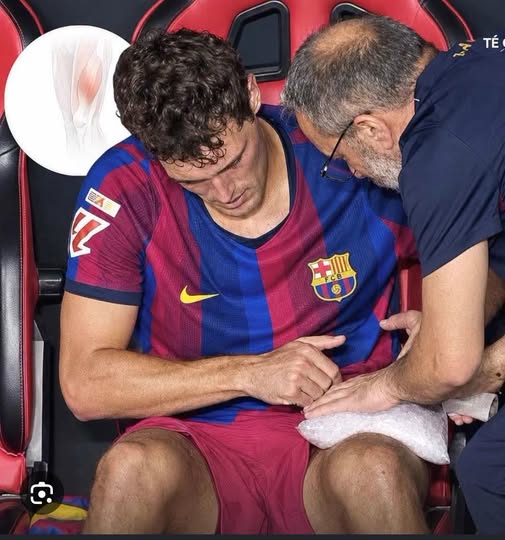
Barcelona have suffered another setback in defence, with Andreas Christensen facing a spell on the sidelines after sustaining a muscle injury. For the Danish centre-back, the latest physical problem is more than a temporary interruption to his season. It raises fresh questions about his long-term reliability, his role under Hansi Flick, and Barcelona’s decision to extend his contract until 2028.
The situation is particularly frustrating for Christensen because he had only recently returned to regular first-team football after a difficult period marked by injuries. Barcelona need experienced defenders who can provide stability throughout a demanding campaign, but the 30-year-old now faces another battle to regain full fitness and maintain his place in the squad.
Another Injury at the Wrong Time
Christensen’s latest setback came during Barcelona’s match against Sevilla in September 2026. The defender was forced off after experiencing discomfort in his left leg, prompting concerns about another interruption to his campaign.
Barcelona subsequently confirmed that medical tests had identified a muscle injury affecting the rectus femoris of his left quadriceps. The club stated that he would be unavailable for the coming weeks, with his recovery determining when he could return.
Although the injury has sometimes been described broadly as a hamstring or thigh problem, Barcelona’s official diagnosis identified the quadriceps muscle rather than the hamstring.
The distinction matters, but the wider concern remains the same: Christensen has struggled to enjoy an uninterrupted run of football over recent seasons.
For a defender whose game depends on positioning, anticipation and composure on the ball, regular training and match fitness are essential. Every absence makes it more difficult to build momentum, establish defensive partnerships and convince the coaching staff that he can be relied upon in the biggest matches.
Barcelona will therefore be cautious about rushing him back. A premature return could create further complications, potentially turning a short-term absence into another prolonged period away from the pitch.
A Contract Until 2028 — But What Does It Mean?
Barcelona announced an agreement in July 2026 to extend Christensen’s contract until 30 June 2028, adding two more seasons to his previous deal.
The decision reflected the club’s belief that the Danish international still has an important contribution to make. When fit, Christensen offers qualities that are valuable in Flick’s system: intelligent positioning, calm distribution, tactical flexibility and experience at the highest level.
He initially joined Barcelona from Chelsea in 2022 and gradually established himself as a dependable defensive option. His ability to progress the ball from the back helped him become an important part of the team during his early seasons in Catalonia.
However, the contract extension now carries a difficult question.
Can Barcelona obtain sufficient value from a player whose availability has repeatedly been interrupted by physical problems?
The length of a contract does not guarantee a player a regular place in the starting eleven. Nor does another injury automatically mean that an extension was a mistake. The real test will be whether Christensen can return to sustained fitness and contribute consistently over the coming months.
Reports surrounding the renewal have also highlighted a possible safeguard allowing the second year of the agreement to be ended early. If that arrangement applies as reported, it would give both the player and the club additional flexibility rather than committing them unconditionally through the entire period.
For Barcelona, that distinction could prove important.

The Injury History Barcelona Cannot Ignore
Christensen’s latest muscle problem comes after a particularly difficult 2025–26 season.
In December 2025, Barcelona confirmed that he had suffered a partial tear of the anterior cruciate ligament in his left knee. The club opted for conservative treatment, and the defender eventually returned to action against Valencia in May 2026, having spent 158 days out of the team.
That absence disrupted his rhythm and limited his ability to help Barcelona during a demanding period of the season.
His return initially offered encouragement. He entered the new campaign with the opportunity to rebuild his fitness and demonstrate that he could again be a dependable member of Flick’s defensive rotation.
Instead, the latest muscle injury has interrupted that progress.
This is the central issue facing both the player and the club. Barcelona are not simply assessing the severity of one isolated injury. They must consider the cumulative impact of repeated absences on his match readiness, workload and ability to maintain consistent performances.
At 30, Christensen still has the experience and technical quality to compete at the highest level. But his value to the team will depend increasingly on how often he is available, rather than on his reputation alone.
How Much Does Barcelona Need Him?
Barcelona’s defensive structure depends on more than the two centre-backs selected for the biggest matches. A long season requires depth, rotation and players who can step in when injuries or suspensions affect the first-choice options.
Christensen provides a different profile from some of his defensive teammates. His reading of the game and composure in possession can help Barcelona maintain control when building attacks from deep. He has also demonstrated versatility, having previously operated in midfield when circumstances required it.
Those qualities make him a useful option for Flick.
His absence, however, forces Barcelona to manage their defensive resources carefully. Other centre-backs may need to shoulder additional minutes, while the coaching staff must balance the need for continuity with the risk of overworking available players.
The consequences could become more significant if further injuries occur or the fixture schedule becomes increasingly congested.
Barcelona cannot afford to plan an entire season around the assumption that every defender will remain fit. At the same time, losing an experienced player reduces the number of reliable options available to the manager.
Christensen’s recovery is therefore important not only for his own career but also for the club’s broader defensive planning.
A Test of Trust for Hansi Flick
Flick now faces a delicate decision over how to reintegrate the Danish defender once he is medically cleared.
The coach must consider Christensen’s physical condition, his sharpness in training and the demands of upcoming matches. Even if the defender returns to the squad relatively soon, that does not necessarily mean he will immediately regain a starting position.
Barcelona will need to assess his progress step by step.
A gradual return could allow Christensen to rebuild confidence and fitness without being exposed to an excessive workload. It would also give Flick the opportunity to evaluate whether he can once again compete consistently for a place in the starting eleven.
For Christensen, the objective is straightforward: return to full fitness, remain available and demonstrate that his experience can still make a meaningful difference.
The challenge is turning that objective into a sustained period of football rather than another brief comeback followed by another spell on the sidelines.
Barcelona Must Separate Patience From Risk
There is a strong argument for giving Christensen time. He has already demonstrated his technical quality, understands Barcelona’s playing style and possesses considerable experience in major competitions.
Writing him off because of another injury would be premature.
Yet patience must also be accompanied by realistic planning. Barcelona have to protect their defensive depth, evaluate the physical demands placed on their squad and ensure that contract decisions remain aligned with the club’s sporting needs.
The extension until 2028 gives Christensen an opportunity to rebuild his position at the club. It also gives Barcelona a longer period in which to assess whether he can become a consistent contributor again.
Ultimately, the agreement will be judged by what happens on the pitch.
If Christensen returns strongly and strings together a significant run of appearances, the extension could prove valuable. If injuries continue to prevent him from playing regularly, questions about the club’s defensive planning and the structure of his contract will inevitably grow louder.
Neither outcome can be determined by the latest setback alone.
The Bigger Question: Can Christensen Finally Find Stability?
For now, Barcelona’s priority is his recovery. The club has not established a definitive return date in its official medical announcement, and any more precise timetable should be treated as provisional until further information becomes available.
Christensen must concentrate on regaining his fitness, while Flick and the medical staff must determine how best to manage his return.
But the broader issue will remain long after this particular injury has healed.
Barcelona extended his contract because they believe he can still contribute. Christensen now has the opportunity to repay that confidence by demonstrating that he can remain fit, compete consistently and provide the defensive reliability the team needs.
The coming months will be important in determining how his role develops.
The latest injury does not prove that Barcelona made the wrong decision by extending Christensen’s contract until 2028. It does, however, underline the risk attached to relying on a defender whose recent seasons have been repeatedly disrupted by fitness problems.
For Christensen, the mission is no longer simply to recover from another injury. It is to establish the consistency that has so often eluded him.
For Barcelona, the question is whether the defender they chose to keep until 2028 can finally deliver the sustained availability that would make that decision worthwhile.
Only time, fitness and performances on the pitch will provide the answer.
You Might Also Enjoy



Manchester United finalising deal to appoint Mauricio Pochettino as Carrick replacement

Single Dad Took Two Bullets Saving the Army General’s Daughter — “Move, I’ll Handle This!”

They Tried to Take the Stray Puppy—Then the Quiet Nurse Realized Why the K9 Needed Him



