Diddy Prison Life: VIP Treatment or Just a Normal Prison Hustle?
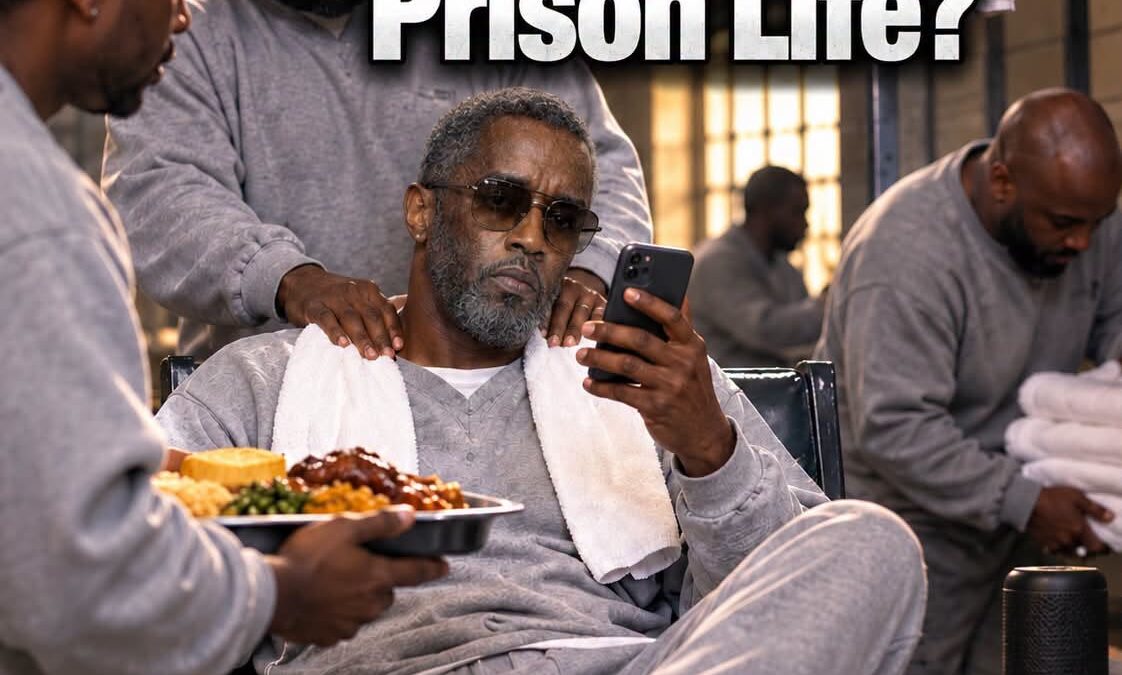
Sean “Diddy” Combs’ life behind bars is making headlines again after NBC News spoke with four former inmates who described what they claim is an unusual level of privilege surrounding the music mogul.
According to their accounts, Combs allegedly paid other inmates to perform everyday tasks such as cooking, cleaning and doing laundry. The former inmates also claimed that he received Chinese-style massages and may have had access to contraband cellphones and other perks inside the facility.
The allegations have sparked an obvious question: Is Combs receiving VIP treatment in prison, or is this simply an example of the informal economy and prison “hustle” that exists in many correctional facilities?
Money Can Buy Comfort — Even Behind Bars?
Prison life operates under strict rules, but informal exchanges between inmates are not unusual. In many facilities, prisoners find ways to trade goods, services or favors for things that can make daily life easier.
Having money or outside connections can potentially provide an inmate with greater access to certain comforts. Paying another prisoner to handle chores or provide services, if such activity is actually taking place, would not necessarily mean that prison officials are formally granting VIP privileges.
But the allegations become more serious when they involve contraband phones or other prohibited items.
Cellphones are generally heavily restricted inside prisons because they can allow inmates to communicate outside official channels. If an inmate is found to have unauthorized access to one, that could raise significant security concerns.
Diddy’s Team Pushes Back
Combs’ representatives have argued that the intense attention surrounding his prison life is largely a consequence of his celebrity status.
That argument raises an important point. Famous inmates inevitably attract more public curiosity than ordinary prisoners. Stories about what a celebrity eats, who they associate with or how they spend their time behind bars can quickly become national news.
At the same time, celebrity status can create its own unusual dynamics inside a prison. Other inmates may recognize an opportunity to make money or obtain favors by providing services to someone who has greater financial resources.
So the question is not necessarily whether Combs is being treated like a celebrity by prison officials. It may instead be whether his fame and financial resources allow him to participate in the same informal prison economy that exists for other inmates—just on a different scale.
VIP Treatment or Prison Hustle?
The distinction matters.
If prison staff are knowingly giving Combs special privileges that other inmates cannot obtain, that would look much more like genuine VIP treatment.
If, however, other inmates are independently offering services in exchange for money or favors, it could be better described as an informal prison hustle—although that does not automatically make every transaction legal or permitted under prison regulations.

The allegations involving contraband phones would be particularly significant if independently confirmed, because that would go beyond simply paying someone to do laundry or prepare food.
For now, however, the public should distinguish between allegations, accounts from former inmates and independently verified facts. A sensational prison story can easily blur those lines, especially when the inmate involved is one of the world’s most recognizable entertainers.
The Bigger Question
Perhaps the most interesting part of the story is not whether Combs is getting a massage or having someone do his laundry. It is what the allegations reveal about life inside America’s prisons.
Money, connections and reputation can have value almost anywhere—including behind bars. The rules may be different, but informal markets and social hierarchies can still develop.
If Combs really is receiving extraordinary privileges, authorities would need to determine how those privileges were obtained and whether prison rules were violated.
If the claims are simply examples of ordinary inmate-to-inmate exchanges, then the story may say as much about the realities of prison culture as it does about Combs himself.
For now, the debate remains open: Is Diddy receiving VIP treatment because of his fame and wealth, or is he simply navigating the same prison hustle that other inmates use to make life behind bars a little more comfortable?
The answer may depend on what investigators can actually verify—not just what former inmates claim happened behind prison walls.
You Might Also Enjoy



Manchester United finalising deal to appoint Mauricio Pochettino as Carrick replacement

Single Dad Took Two Bullets Saving the Army General’s Daughter — “Move, I’ll Handle This!”

They Tried to Take the Stray Puppy—Then the Quiet Nurse Realized Why the K9 Needed Him