You Have No Family, He Told His Wife—Until Italy’s Most Powerful Don Bowed to Her
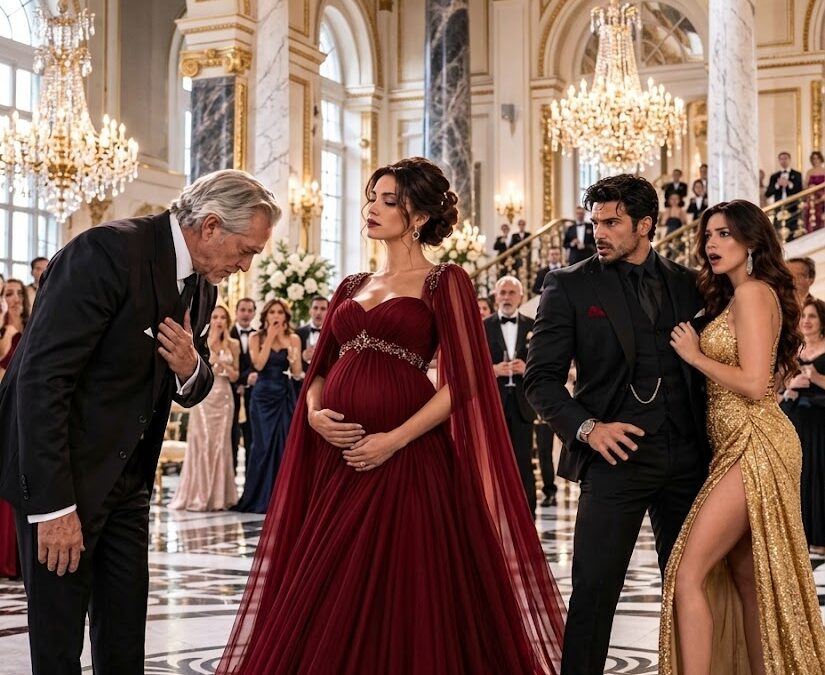
You Have No Family, He Told His Wife—Until Italy’s Most Powerful Don Bowed to Her
Chapter 1: “You Have No Family”
“Remember something, Clara. You have no family, no connections, and no one who would come looking for you if you disappeared.”
Luca Romano delivered the words so casually that, for a moment, his wife thought she had misunderstood him.
The grand dining room of the Romano mansion was silent except for the ticking of the antique clock above the fireplace. Outside, rain swept across the gardens, and the security lights illuminated the iron gates surrounding the estate.
Clara Romano sat at the far end of the marble table, her untouched dinner growing cold.
At twenty-eight, Clara was a curvy woman with soft brown eyes, long chestnut hair, and a gentle face that made people underestimate her. She preferred simple dresses to designer gowns, enjoyed baking bread on Sunday mornings, and still thanked the household staff whenever they brought her a cup of tea.
She had been married to Luca for two years.
Two years of trying to make a marriage work with a man who seemed to resent her very existence.
Luca was thirty-six, handsome, wealthy, and feared throughout southern Italy. As the head of the Romano crime family, he controlled shipping companies, private security firms, and a network of businesses that gave him influence far beyond his home city.
He had married Clara because their families had arranged the union to settle a business dispute.
At least, that was what everyone believed.
Clara had entered the marriage hoping that affection might eventually grow between them.
Luca had entered it expecting obedience.
Tonight, she had made the mistake of asking him a question.
“Luca,” she said quietly, “would it be possible for me to visit my mother’s grave next week?”
He didn’t look up from his phone.
“Why?”
“Because it’s her birthday.”
“And?”
Clara swallowed.
“I’d just like to leave some flowers.”
Luca finally raised his eyes.
“Your mother died when you were a child. You barely remember her.”
“I remember enough.”
“And your father abandoned you. You told me yourself that you grew up in an orphanage.”
The words struck harder than he intended—or perhaps exactly as he intended.
Clara lowered her gaze.
“Yes. I did.”
“Then why are you still clinging to people who aren’t there?”
She folded her hands in her lap.
“Because they were still my family.”
Luca gave a humorless laugh.
“Family? You have no family, Clara.”
She went completely still.
He leaned back in his chair, his expression cold.
“No father. No mother. No brothers waiting to rescue you. You should be grateful that I gave you my name and a place in this house.”
Clara looked at him for several seconds.
Then she asked the question that had been burning inside her for two years.
“Is that really what you think I owe you for?”
Luca’s eyes hardened.
“Don’t test me.”
“I’m not testing you. I’m asking whether you have ever considered that I might have feelings, too.”
He stood abruptly.
The chair scraped against the marble floor.
“Feelings won’t keep you alive in my world.”
“And neither will cruelty.”
The words escaped before she could stop them.
Luca stared at her.
No one in the Romano household spoke to him that way.
Not his lieutenants. Not his business partners. Not even his enemies, unless they had a death wish.
But Clara wasn’t finished.
“I have never asked you for expensive jewelry. I’ve never asked you to buy me a mansion. I only wanted you to treat me like a human being.”
“You want respect?” he snapped. “Earn it.”
Clara’s eyes filled with tears, but she refused to let them fall.
“How?”
For a moment, Luca said nothing.
Then he picked up his jacket.
“Learn your place.”
He walked out of the dining room, leaving her alone beneath the crystal chandelier.
A few minutes later, Clara heard the front doors open.
Then came the sound of an engine.
Her husband was leaving again.
She sat motionless until the headlights disappeared beyond the gates.
Only then did she allow herself to cry.
But what Luca Romano didn’t know was that his wife had never been as alone as he believed.
And the people who had been searching for her for twenty years were finally close enough to find her.
Very close.
Chapter 2: The Black Cars Arrived at Dawn
At 6:15 the next morning, the Romano mansion’s security system registered six vehicles approaching the main gates.
The first was a black Mercedes.
Behind it came five armored SUVs with tinted windows.
The head of security, Marco Bellini, immediately stepped into the control room.
“Who authorized these vehicles?”
“No one, sir.”
“Contact the drivers.”
“We tried. They aren’t responding.”
Marco leaned toward the monitor.
Then he saw the insignia on the lead vehicle.
A silver crown above a black wolf.
His face went pale.
“Open the gates.”
The junior guard stared at him.
“Sir?”
“I said open the gates!”
The iron gates swung apart.
The convoy moved through the entrance without stopping.
Upstairs, Clara had just finished making herself a cup of tea when she heard hurried footsteps in the hallway.
The housekeeper, Mrs. Rossi, appeared at her bedroom door.
“Madam! You must come downstairs!”
Clara frowned.
“What’s happened?”
“I don’t know, but Mr. Bellini says we must prepare the reception hall immediately.”
“For whom?”
The older woman hesitated.
“Someone very important.”
Clara glanced toward the clock.
“Is Luca home?”
“No, madam. He’s at the port.”
Clara sighed.
“Then there’s no reason for me to be involved. Please tell them I’ll stay upstairs.”
Mrs. Rossi looked almost frightened.
“Madam, I don’t think you understand.”
Before Clara could ask another question, a deep voice echoed from the entrance hall.
“Where is she?”
Every conversation downstairs stopped.
The voice was calm, but it carried an authority that seemed to travel through the entire mansion.
“I want to see my granddaughter.”
Clara’s teacup slipped from her fingers.
It struck the carpet and tipped over, spilling tea across the floor.
Granddaughter?
She had been told her entire life that her parents were dead or gone. The orphanage records listed her mother as deceased and her father as unknown. She had grown up believing there was no one left to claim her.
Yet someone had just arrived at the Romano estate asking for her.
And he had brought an entire convoy.
Clara hurried to the balcony overlooking the entrance hall.
Below, a line of men in dark suits stood with military precision.
At their center was an elderly man with silver hair, a black walking stick, and a face marked by decades of power and hardship.
He wore no visible jewelry except for a gold ring bearing the same silver crown and black wolf she had seen on the cars.
Beside him stood a woman in an elegant navy suit, holding a leather folder.
The elderly man looked around the hall.
“Where is my granddaughter?”
Marco Bellini stepped forward, visibly nervous.
“Sir, I believe there may be a misunderstanding.”
The old man’s gaze settled on him.
“Do you know who I am?”
Marco swallowed.
“Yes, sir.”
“Then you know I don’t travel across half of Italy because of a misunderstanding.”
Silence swallowed the hall.
Clara gripped the balcony railing.
She didn’t know this man.
She had never seen him before.
But something about his face—the shape of his eyes, the line of his jaw—felt strangely familiar.
Then the old man looked up.
His eyes found her.
He stopped breathing for a moment.
The walking stick slipped slightly in his hand.
“Maria,” he whispered.
The woman beside him looked up.
“Sir?”
“No.”
His voice trembled.
“Her name is Clara.”
He began walking toward the staircase.
Clara stepped back instinctively.
“Please,” she called down, “who are you?”
The elderly man stopped at the bottom of the stairs.
For several seconds, he simply looked at her.
Then he removed his black gloves.
“My name is Vittorio De Luca.”
He paused, as if the next words were too painful to speak.
“I am your mother’s father.”
Clara shook her head.
“No. My grandfather died before I was born.”
“That’s what you were told.”
“Then why didn’t you find me?”
The old man’s expression crumpled.
“Because someone made certain I couldn’t.”
Clara felt the world tilt beneath her feet.
Vittorio climbed one step, then another.
“I searched for you for twenty years,” he said. “I hired investigators. I questioned people who had worked for your father. I followed every lead, and every time I came close, someone had already erased the trail.”
His eyes shone.
“When I finally learned where you were, I came immediately.”
Clara pressed a hand over her mouth.
She wanted to believe him.
She was terrified to believe him.
“Why now?”
Vittorio reached into his jacket and removed a small photograph.
It showed a young woman with chestnut hair holding a baby wrapped in a white blanket.
Clara recognized the woman’s face.
She had seen it in the only photograph she possessed of her mother.
Vittorio held the picture out.
“Because I promised your mother I would bring you home.”
Clara stared at the photograph.
Then she began to cry.
Not the quiet tears she had shed after Luca’s cruel words.
These were the tears of someone who had spent her entire life believing she had been forgotten.
Vittorio opened his arms.
For one uncertain second, Clara remained still.
Then she descended the last few steps and fell into his embrace.
The elderly man held her tightly, his shoulders shaking.
“My little girl,” he whispered. “My beautiful little girl.”
Behind them, the security guards stood frozen.
Because Vittorio De Luca was not simply a wealthy Italian businessman.
He was the most powerful mafia don in Italy.
And he had just found the granddaughter he had spent twenty years searching for.
Chapter 3: The Man Who Made Italy Tremble
By 8:00 a.m., Luca Romano had received seventeen missed calls.
He ignored the first ten.
The eleventh came from Marco.
The twelfth came from the mansion’s chief administrator.
The thirteenth came from a man who had never called him before.
When the fourteenth call appeared, Luca finally answered.
“What?”
Marco’s voice sounded strained.
“Boss, you need to return to the mansion.”
“I’m at the port.”
“This is urgent.”
“Then explain.”
There was a pause.
“Vittorio De Luca is here.”
Luca went silent.
For the first time that morning, the expression on his face changed.
“Repeat that.”
“Don Vittorio De Luca. He’s inside the mansion.”
Luca stood so quickly that his chair fell backward.
“Why?”
“He says Madam is his granddaughter.”
The office seemed to shrink around him.
“That is impossible.”
“Sir, he has documents. Photographs. Family records. His legal team is here, too.”
Luca stared at the harbor beyond the glass windows.
Every powerful man in Italy knew the name Vittorio De Luca.
He was the last surviving patriarch of an old criminal dynasty, a man whose influence stretched from Sicily to Milan. He had survived assassination attempts, betrayals, and two decades of violent family feuds.
Some called him a businessman.
Others called him a king.
His enemies called him the Devil of Palermo.
And according to Marco, Clara was his granddaughter.
Luca grabbed his jacket.
“Get the cars ready.”
“Sir, there’s something else.”
“What?”
“Don Vittorio has asked that you be present when he speaks to his granddaughter.”
Luca’s jaw tightened.
“Why would he want to speak to me?”
Marco hesitated.
“Because, sir, he has learned about your marriage.”
The call ended.
Luca stood motionless for two seconds.
Then he stormed out of the office.
During the drive back to the estate, he tried to make sense of the news.
Clara had never spoken about powerful relatives.
She had never mentioned the De Luca family.
She had never behaved like someone with a hidden inheritance or a secret connection to Italy’s most feared crime dynasty.
She had always seemed so ordinary.
Quiet.
Gentle.
Unimportant.
The thought made him uncomfortable.
Because he suddenly remembered every time he had told her that she had no one.
Every time he had mocked her past.
Every time he had reminded her that she should be grateful to have his name.
If Vittorio De Luca believed Luca had mistreated his granddaughter, the consequences could be catastrophic.
But Luca wasn’t only afraid of the Don.
He was afraid of what Clara might have told him.
For the first time in their marriage, Luca found himself hoping his wife had kept her pain to herself.
He arrived at the mansion twenty-five minutes later.
The entrance hall was crowded with men in dark suits.
His own guards stood stiffly against the walls, avoiding eye contact with the newcomers.
At the center of the room, Clara sat beside Vittorio on a velvet sofa.
She looked exhausted, her eyes red from crying.
But there was something different about her.
She was holding herself straighter.
And when Luca entered, she did not rise to greet him.
He stopped several feet away.
“Clara.”
She looked at him.
“Luca.”
Vittorio turned slowly.
“So,” he said, “you are the husband.”
Luca forced himself to maintain eye contact.
“Don Vittorio. I wasn’t aware that Clara was related to your family.”
“That is obvious.”
The older man’s tone was polite.
It was also colder than the winter sea.
Vittorio placed one hand on Clara’s shoulder.
“Tell me, Mr. Romano. How has my granddaughter been treated in your home?”
Luca glanced at Clara.
She looked away.
A terrible feeling settled in his stomach.
“She is my wife,” he answered. “I have provided everything she needs.”
Vittorio’s eyes narrowed.
“Everything?”
“Yes.”
“Food? Clothing? A roof over her head?”
“Of course.”
“And respect?”
Luca said nothing.
Vittorio leaned forward.
“Did you make her feel that she had no family?”
The silence that followed was answer enough.
Clara closed her eyes.
Luca’s face hardened.
“This is a private matter between my wife and me.”
“No,” Vittorio replied. “It became my business the moment you used her loneliness to humiliate her.”
Luca felt the room turn against him.
Then Vittorio rose.
Every man in the hall immediately straightened.
The Don walked toward Clara, gently took her hand, and pressed a kiss to her forehead.
“You are coming home with me,” he said. “No one will ever make you feel unwanted again.”
Clara’s lips trembled.
She nodded.
Luca took one step forward.
“Wait.”
Vittorio turned.
“Do you have something to say?”
Luca looked at his wife.
For the first time, he realized that she might walk away from him without asking permission.
“Clara,” he said, his voice quieter than before. “Can we talk?”
She looked at him for a long moment.
Then she answered with five words that struck him harder than any threat.
“You’ve had two years.”
Chapter 4: The Don Bowed to Her
Clara had almost reached the entrance when Vittorio suddenly stopped.
He turned toward her.
“Before we leave, there is something I must do.”
He signaled to the woman in the navy suit.
She opened the leather folder and handed him a document.
Vittorio took Clara’s hand and led her to the center of the hall.
Then, to the astonishment of everyone present, Italy’s most powerful Don lowered himself onto one knee.
A collective gasp swept through the room.
Even his own men looked stunned.
Vittorio De Luca had never bowed to a rival.
He had never knelt before a king, a politician, or a man who threatened his life.
Yet there he was, kneeling before the granddaughter he had finally found.
Clara stared at him in alarm.
“Grandfather, please get up!”
He shook his head.
“Not yet.”
He took the document from the folder.
“For twenty years, I have carried the shame of failing to protect your mother. When she disappeared, I searched for her until the day I was told she had died. I believed that I had lost everything she had left behind.”
His voice cracked.
“Then I learned you were alive.”
Tears slipped down Clara’s cheeks.
Vittorio lifted his eyes to hers.
“You were born into a family that should have protected you. Instead, people hid the truth, and you grew up believing you had been abandoned.”
He lowered his head.
“I cannot give you back your childhood. I cannot return the years we lost. And I cannot undo the pain you suffered in this house.”
He glanced briefly at Luca.
“But I can make you one promise.”
His fingers tightened around hers.
“From this day forward, you will never have to beg anyone to recognize your worth. Not for a home. Not for protection. Not for a place at the table.”
He bowed his head again.
“You are a De Luca. You are my blood. And you are loved.”
The hall was completely silent.
Clara dropped to her knees and threw her arms around him.
“Please don’t apologize,” she whispered. “You found me. That’s enough.”
Vittorio held her as though he feared she might vanish if he let go.
Behind them, Luca stood frozen.
He had watched powerful men tremble at the sound of his own name.
He had believed that wealth, influence, and fear were the foundations of respect.
But now he was watching a man with more power than he could imagine kneel before a woman he had repeatedly dismissed.
Not because Clara demanded it.
Not because she threatened him.
But because Vittorio loved her enough to humble himself before her.
And suddenly, Luca understood how small he had made himself look.
He had mistaken Clara’s gentleness for weakness.
Her silence for helplessness.
Her lack of connections for a lack of worth.
Yet the woman he had called insignificant had just been embraced by a man who could bring half the country’s underworld to a standstill.
Vittorio finally stood and turned toward Luca.
His expression had changed.
The tenderness was gone.
“Mr. Romano, my granddaughter will leave this house today.”
Luca’s voice was tight.
“She is my wife.”
“She is a woman with the right to decide what happens to her life.”
“We have a marriage contract.”
Vittorio gave a thin smile.
“Then I suggest you read it carefully.”
He nodded toward his legal adviser.
The woman stepped forward and opened the folder to a marked page.
“Mr. Romano,” she said, “the original agreement contains a clause concerning coercion, mistreatment, and the protection of Mrs. Romano’s independent assets. If Mrs. Romano chooses to separate, she is entitled to leave without penalty.”
Luca looked at Clara.
She had never told him about the assets she had inherited from her mother.
He had never bothered to ask.
Vittorio adjusted his cuff.
“We are not here to start a war. We are here to take Clara home.”
He paused.
“But if anyone attempts to prevent her from leaving, I will consider it an attack on my family.”
Every man in the room understood the warning.
Luca understood it best of all.
Clara stood beside her grandfather.
For the first time since their wedding, she looked at Luca without fear.
“I don’t want revenge,” she said quietly. “I only want my life back.”
Then she turned and walked through the front doors.
And Luca Romano, who had once told his wife she had no family, was left standing in the mansion with nothing but the echo of his own words.
Chapter 5: The Truth About Clara’s Mother
The De Luca estate stood on a hill overlooking the Mediterranean Sea.
It was older than the Romano mansion, built from pale stone with wide terraces, gardens filled with orange trees, and a private chapel overlooking the water.
When Clara arrived, dozens of staff members lined the entrance.
Some cried.
Others smiled through their tears.
Vittorio had sent word throughout the household that his granddaughter had returned.
But Clara barely noticed the reception.
She was staring at a portrait hanging above the grand staircase.
A young woman stood in a field of white flowers, holding a straw hat in one hand.
She had Clara’s eyes.
Her smile.
Even the same small dimple in her left cheek.
“My mother,” Clara whispered.
Vittorio stood beside her.
“Yes. Her name was Elena.”
Clara approached the portrait slowly.
“Why was I told she died when I was a baby?”
Vittorio’s expression darkened.
“Because your mother tried to leave our world.”
He led Clara into a private library.
There, he explained the truth.
Elena had been his only daughter. She had fallen in love with a man outside the De Luca family and had tried to build a quiet life away from the violence surrounding her father’s empire.
When Clara was born, Elena made Vittorio promise that her daughter would grow up free from the family’s enemies.
He had agreed.
But before he could arrange their escape, a bitter feud erupted between rival factions.
Elena disappeared with her infant daughter.
For months, Vittorio searched for them.
Then a fire destroyed the house where Elena had been staying.
Investigators found evidence suggesting that Elena had died.
But no body was ever identified with certainty.
Vittorio never stopped searching.
He had followed false leads across Europe, paid informants who betrayed him, and spent years trying to discover what had happened to the child Elena had been carrying.
Eventually, an old family lawyer uncovered a set of adoption records.
The baby had survived.
She had been placed in an orphanage under a different surname.
And later, that girl had married Luca Romano.
Clara listened without speaking.
“So my mother might not have died in the fire?”
Vittorio looked down.
“I don’t know.”
“Then she’s not confirmed dead?”
“No.”
Clara’s hands began to tremble.
“Why didn’t you tell me this before?”
“I only discovered the truth six weeks ago. I wanted to be certain before I came to you.”
Clara looked back at the portrait.
For twenty years, she had believed that the people who gave birth to her had simply disappeared.
Now she had a grandfather who loved her, a family she had never known, and a question that refused to leave her mind.
What if her mother had survived?
Vittorio took her hand.
“If you want answers, we will search for them together.”
Clara turned toward him.
“You would really do that?”
He looked almost offended.
“My dear girl, I would search every corner of the world for you.”
For the first time in years, Clara smiled without forcing herself.
And far away, in the Romano mansion, Luca sat alone in his study, staring at a photograph of his wife.
He had spent two years believing he knew everything about her.
He had known nothing.

Chapter 6: The Mafia Boss Begged for One More Chance
Three weeks passed.
Clara settled into the De Luca estate, met relatives she had never known existed, and began helping with a charitable foundation her mother had established before her disappearance.
She discovered that she had inherited more than a family name.
She had inherited her mother’s love of flowers, her grandfather’s stubbornness, and a surprising talent for negotiation.
For the first time, she made decisions without asking permission.
She chose her own clothes.
She traveled where she wanted.
She spent evenings reading by the sea.
And every morning, Vittorio joined her for breakfast.
He never asked her to forgive Luca.
He never told her that marriage required sacrifice.
He simply made sure she knew she had a choice.
Meanwhile, Luca changed in ways no one in his organization understood.
He stopped attending unnecessary parties.
He sent back the expensive gifts he had once purchased to quiet arguments.
He even began visiting the charity hospital Clara had supported, making anonymous donations without attaching his name.
But the one thing he could not do was forget her.
One evening, a message arrived at the De Luca estate.
It contained no threats or demands.
Only a request.
Please allow me ten minutes to speak with Clara. If she refuses, I will leave and never contact her again.
Vittorio showed Clara the message.
She read it twice.
Then she handed it back.
“I’ll see him.”
Vittorio studied her face.
“Are you certain?”
“Yes. But I want to meet him outside the estate.”
“Where?”
“The little chapel by the sea.”
Vittorio nodded.
“Then he may come.”
The following afternoon, Luca arrived alone.
No convoy.
No bodyguards.
No expensive car.
He wore a simple dark suit and carried no gift.
Clara waited outside the chapel, dressed in a cream-colored coat. The sea wind moved gently through her hair.
Luca stopped several steps away.
For a long moment, he seemed unable to speak.
Then he said, “You look well.”
“I am.”
He lowered his eyes.
“I’m glad.”
Silence settled between them.
Finally, Luca took a breath.
“I came to apologize.”
Clara said nothing.
“I told you that you had no family because I wanted you to feel that you needed me. I thought if you believed you had nowhere else to go, you would never leave.”
His voice faltered.
“I was wrong.”
Clara looked at him steadily.
“You didn’t just make me feel alone, Luca. You made me believe there was something wrong with me for wanting to be loved.”
He closed his eyes.
“I know.”
“No. I don’t think you do.”
She stepped closer, her voice quiet but firm.
“You had every opportunity to know me. I told you about my dreams. I told you what I was afraid of. I asked you to spend time with me. I asked you to listen.”
Tears filled her eyes.
“And every time, you made me feel foolish for asking.”
Luca’s face crumpled.
“I can’t change what I did.”
“No, you can’t.”
“But I can change what I do from now on.”
Clara looked out at the sea.
“Why?”
He seemed startled.
“Why what?”
“Why do you want me back? Because you love me? Or because you discovered that the woman you treated as insignificant belongs to a powerful family?”
Luca didn’t answer immediately.
It was the hardest question she could have asked.
Finally, he said, “At first, I was afraid of what your grandfather might do to me. I won’t lie about that.”
Clara turned back toward him.
“But when I saw you leave, I realized that I had spent two years treating your presence as something guaranteed. I never considered what my life would look like without you.”
He swallowed.
“I miss the sound of you singing in the kitchen. I miss the way you leave tea beside my desk when you know I’ve been working too long. I miss the woman who used to wait for me at the window.”
His voice broke.
“And I hate that I made her believe she wasn’t worth staying for.”
Clara’s tears slipped down her cheeks.
For a moment, she remembered the beginning of their marriage.
The hope.
The little things she had done.
The future she had imagined.
But remembering the good moments did not erase the bad ones.
“Luca,” she whispered, “I loved you enough to lose myself.”
He stepped forward, then stopped when she lifted her hand.
“I won’t do that again.”
He nodded, tears shining in his eyes.
“I understand.”
“No more deciding where I go. No more reminding me that I should be grateful. No more making me earn basic kindness.”
“Never again.”
“And you cannot use your power to keep me.”
“I won’t.”
She looked at him for a long time.
Then she said, “I don’t know if I can love you again.”
Luca’s shoulders fell.
“But,” she continued, “I am willing to see whether you can become someone I might trust.”
He stared at her, unable to believe what he had heard.
“Does that mean—”
“It means we start with one conversation. Nothing more.”
He nodded quickly.
“One conversation.”
“And if you hurt me again, I will leave.”
“I know.”
Clara turned toward the chapel.
“Then walk with me.”
Luca fell into step beside her.
He did not take her hand.
He did not ask her to promise anything.
For once, he allowed her to decide how close he could stand.
And that was the first real change she had seen in him.
Chapter 7: The Woman Everyone Had Underestimated
Six months later, the De Luca estate hosted a charity gala in honor of Elena De Luca.
The ballroom was filled with Italian business leaders, diplomats, philanthropists, and members of the country’s most influential families.
Clara stood beside her grandfather, wearing a midnight-blue gown and a delicate diamond necklace that had belonged to her mother.
She no longer looked like the frightened young woman who had cried alone at the Romano mansion’s dining table.
She looked composed.
Confident.
At peace with herself.
Vittorio leaned toward her.
“Your mother would be proud of you.”
Clara smiled.
“I wish she could see this.”
“So do I, my dear.”
Across the ballroom, Luca stood with several business associates.
He had come only because Clara had permitted him to attend.
For six months, he had kept his promises. He had attended counseling, accepted Clara’s boundaries, and stopped using his position to control her life.
They were not yet living together.
They were not yet calling themselves a reunited couple.
But there was a possibility between them now—small, fragile, and real.
When Clara approached the podium, the conversations gradually faded.
She looked out at the crowd.
“For most of my life,” she began, “I believed that being alone meant being unwanted.”
Her voice was steady.
“I grew up without knowing where I came from. I entered a marriage believing that if I were patient enough, quiet enough, and good enough, I might eventually earn a place in someone’s heart.”
She paused.
“But I learned something important. Love should never require us to become smaller so someone else can feel powerful.”
Vittorio lowered his head, visibly moved.
Clara continued.
“Family isn’t simply a name or a bloodline. It is the people who protect your dignity, tell you the truth, and stand beside you when you have nothing to offer them.”
She looked toward her grandfather.
“This evening, we are honoring my mother, Elena, whose greatest wish was that I could live without fear.”
The room rose in applause.
Vittorio stood beside her, his eyes shining with pride.
Then something unexpected happened.
As Clara stepped down from the podium, Vittorio turned toward her.
In front of Italy’s most powerful people, the feared Don gently took his granddaughter’s hand.
And bowed.
Not because she had demanded it.
Not because she had threatened him.
But because he wanted the world to understand that her dignity was sacred to him.
The ballroom fell silent.
Then every member of the De Luca family stood.
One by one, the guests followed.
Luca remained still for a moment, watching the woman he had once humiliated receive the respect he had failed to give her.
Then he stood, too.
Clara saw him across the room.
Their eyes met.
He did not approach her.
He did not interrupt the moment.
He simply placed one hand over his heart and lowered his head.
Clara offered him a small smile.
It was not forgiveness for everything.
It was not a promise that they would spend the rest of their lives together.
It was simply an acknowledgment that change was possible.
Later that evening, as the guests gathered beneath the chandeliers, Vittorio slipped his arm around Clara’s shoulders.
“Are you happy, my dear?”
Clara looked around the ballroom.
At the people who had welcomed her.
At the portrait of her mother displayed near the stage.
At the grandfather who had crossed a continent to find her.
Then she looked toward Luca, who stood at a respectful distance, waiting for her to decide whether she wanted him near.
“Yes,” she answered softly. “I finally am.”
Vittorio kissed her forehead.
“Good. That is all I ever wanted.”
And Clara understood, at last, that she had never needed a powerful man to make her valuable.
She had been valuable before the world knew her name.
Before the Don bowed.
Before Luca regretted his cruelty.
Before anyone discovered who she was.
She had always been enough.
And that was the truth no one would ever be able to take from her again.
THE END.
You Might Also Enjoy



Manchester United finalising deal to appoint Mauricio Pochettino as Carrick replacement

Single Dad Took Two Bullets Saving the Army General’s Daughter — “Move, I’ll Handle This!”

They Tried to Take the Stray Puppy—Then the Quiet Nurse Realized Why the K9 Needed Him



