🚨 MANCHESTER UNITED: HOW MANY PEOPLE NEED TO SPEAK UP BEFORE THE LEADERSHIP TAKES ACCOUNTABILITY?
Manchester United has endured too many years of turmoil, too many managerial changes, and too many promises of rebuilding. But after all this, the biggest question remains unanswered: Where does Man United’s real problem lie, and why do those in charge seem to always evade responsibility?
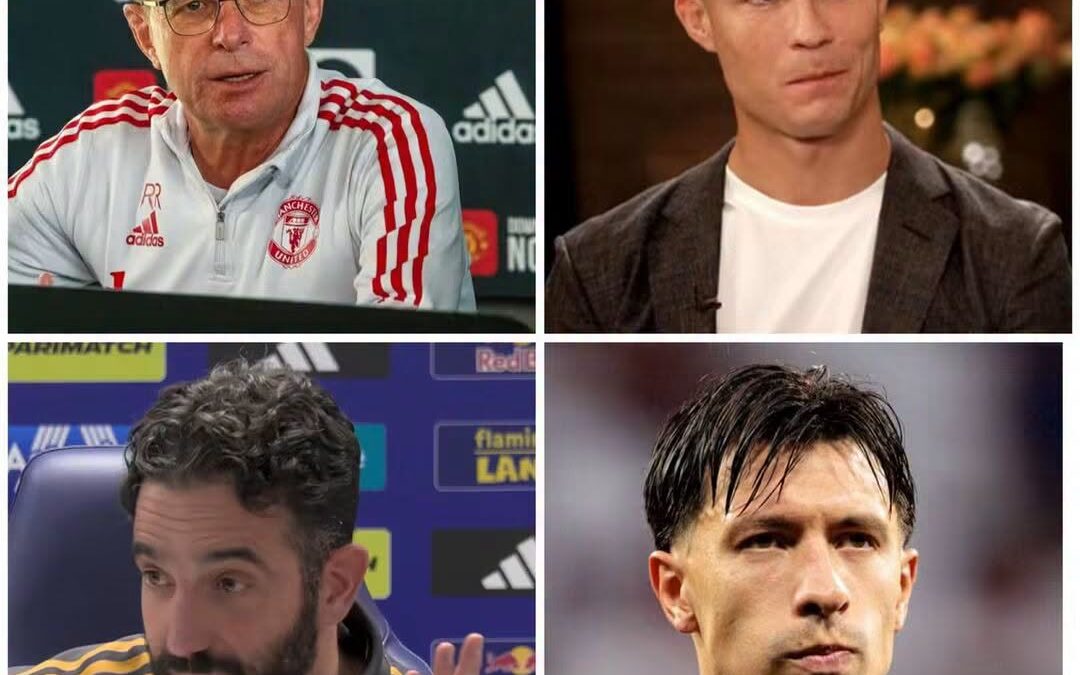
Ralf Rangnick once warned that the team needed “open-heart surgery” to address systemic issues. Cristiano Ronaldo publicly criticized the Glazer owners and the club’s decline. Ruben Amorim also questioned the team’s direction, support, and operation. Now, Lisandro Martínez is said to have spoken out about the problems at Old Trafford.
Each story has its own context, each person has a different perspective. But all of them leave fans with a thought-provoking question: If so many people are constantly pointing out problems, why can’t Man United escape its own vicious cycle?
🔴 RANGNICK WARNED, BUT THE REBUILDING REMAINS A DIFFICULT PROBLEM
When Ralf Rangnick arrived at Manchester United, he didn’t just have to deal with tactical issues on the pitch. The team also faced big questions about structure, personnel, fighting spirit, and long-term direction.
The “open-heart surgery” image Rangnick used reflected the view that Man United needed more than a few new signings or a change on the coaching bench. From this perspective, the problem lay deep within the system and required comprehensive reforms.
However, Rangnick did not continue to lead the team after the 2021–2022 season. What happened afterward continued to fuel debate about the consistency of the club’s development plan.
A big club cannot build its future with a series of short-term decisions. If every manager arrives with their own philosophy, and each change entails a personnel overhaul and a new strategy, the rebuilding process will be very difficult to achieve stability.
What Man United needs is not just someone who sees the problems, but also a system capable of turning warnings into concrete action.
💥 RONALDO VS. THE OWNERS: QUESTIONS THAT CANNOT BE IGNORED
Cristiano Ronaldo once created one of the biggest debates at Old Trafford when he publicly criticized the board, the Glazer owners, and the club’s state in a shocking interview in 2022.
The Portuguese superstar’s statements sparked intense controversy. Some agreed with his criticisms of the facilities, direction, and management of the team; Some also argue that Ronaldo’s choice to publicly address the disagreements only exacerbated the situation.
Ultimately, Ronaldo’s contract with Manchester United was terminated by mutual agreement in November 2022.
But the story shouldn’t just be about whether Ronaldo was right or wrong, or who won the confrontation. More importantly, how far have the organizational issues he raised been resolved?
A club with the history and stature of Manchester United needs to be able to accept criticism, evaluate it with evidence, and provide a clear response. Not every player’s statement is accurate, but a warning shouldn’t be automatically dismissed simply because the person making it left the team under controversial circumstances.
⚠️ AMORIM AND THE CHALLENGE OF LEADERSHIP SUPPORT
Ruben Amorim arrived at Manchester United with the expectation of bringing a new direction. However, changing a struggling team is not simply a matter of implementing a different tactical system or demanding higher intensity from the players.
A successful manager needs to agree with the leadership on recruitment methods, professional standards, player development plans, and realistic goals for each stage.
If the parties don’t share the same vision, the team can easily fall into a state of inconsistency. The manager wants to make personnel changes, but the club has its own limitations; the leadership expects quick results, while team building takes time; and players must adapt to constantly changing demands.
When results don’t meet expectations, the manager is often the one under direct pressure and may lose their position. But changing the manager doesn’t automatically solve problems related to recruitment, management, or long-term strategy.
Amorim has also left his position as head coach. However, to fully assess the causes and responsibilities of each party, it’s necessary to consider specific decisions instead of assuming all problems stem from the leadership or the manager alone.
The important thing is that Man United must demonstrate that each change comes with clear lessons, not simply restarting the same cycle of failure.

👀 LISANDRO MARTÍNEZ SPEAKS OUT — WILL OLD WARNINGS BE HEARD?
Now, statements allegedly from Lisandro Martínez are drawing fans’ attention to the situation inside Manchester United.
Martínez is a player with a strong personality and has experienced difficult times with the team. If a player directly speaks out about the club’s problems, those comments can spark significant discussion about how the team is run.
However, caution is needed regarding speculation that he could be the next to leave simply for expressing his opinion. There isn’t enough evidence to conclude that the management will punish Martínez, and speaking out doesn’t necessarily mean a player is at odds with the club.
Nevertheless, the story raises a larger question: Does Manchester United truly encourage open dialogue?
A professional environment should allow players, coaches, and staff to express concerns responsibly. Legitimate criticism should be taken seriously, while unfounded claims should be clarified with transparent information.
If every disagreement turns into a battle between individuals and the organization, the club will struggle to build a healthy work culture.
🏟️ THE PROBLEM IS NOT JUST ON THE FIELD
Manchester United can still spend money in the transfer market, appoint ambitious managers, and possess talented players. But all of that will not automatically lead to success without a unified plan.
A team wanting to return to the top needs to address many issues simultaneously:
Long-term strategy: Clearly define the direction the team wants to develop and stick to that plan.
Responsible recruitment: Build the squad based on tactical needs, professional quality, and suitability, rather than just chasing fame.
Delineation of responsibility: The manager is responsible for technical matters; the executive department is responsible for decisions within its scope of management.
Transparency: Clearly explain objectives, evaluate results, and acknowledge mistakes when decisions are ineffective.
Continuity: Avoid a complete rebuilding process every time a manager is changed, causing the team to constantly return to square one.
These are the decisive factors in whether Manchester United can rebuild a solid foundation or continue to be caught in a series of crises.
🔥 WHY ARE MANAGERS AND PLAYERS OFTEN THE FOCUS OF EVERY CRISIS?
In football, managers and players are the ones who appear directly in front of the public. A failure, a substitution decision, or a poor performance can quickly become a topic of debate.
Conversely, decisions about management structure, transfer plans, and resource allocation are often more complex, difficult to assess immediately, and less visible to fans. This makes sacking the manager or criticizing players sometimes the most obvious reaction when results fall short. But if the root cause lies in an inconsistent system, constant personnel changes may only address the symptoms.
Of course, the board cannot be held responsible for every goal conceded, every wrong decision, or every disappointing performance. The manager and players are still accountable for their part.
But responsibility must be distributed fairly. If those making strategic, recruitment, and organizational decisions are not held accountable when plans fail, the club will struggle to make real changes.
It’s impossible to build a new Manchester United simply by constantly replacing those at the forefront.
🔴 IT’S TIME FOR MANCHESTER UNITED TO RE-EVALUATE THEMSELVES
Rangnick has warned of the need for a far-reaching overhaul. Ronaldo has publicly questioned how the club is run. The controversies surrounding Amorim continue to highlight the importance of unity between the manager and the board. Now, news concerning Martínez is causing fans to question the internal culture at Old Trafford.
Each case has its own context, and these statements shouldn’t be taken as proof that they all lead to the same conclusion. But they are enough to emphasize that rebuilding Manchester United requires more than just promises of a new era.
Fans don’t just want to see big signings. They want to know who is accountable when strategies fail, how past mistakes will be rectified, and whether the club can maintain a clear direction across multiple seasons.
Manchester United cannot change the past, but they can absolutely choose how to build the future. That begins with transparency, well-founded decisions, and a willingness to take responsibility at all levels.
How many more people need to speak up before those in charge truly listen?
And more importantly, how many times will the team have to repeat the same mistakes before realizing that changing the manager doesn’t always mean fundamental change?
Manchester United’s biggest problems may not just be on the pitch. It’s also about how the club is managed, how decisions are made, and how accountability is enforced.
It’s time for clear answers at Old Trafford — not more promises, more blame, or more rebuilding from scratch.
IT’S TIME FOR MANCHESTER UNITED TO TAKE RESPONSIBILITY AND REAL CHANGE!
You Might Also Enjoy
Manchester United finalising deal to appoint Mauricio Pochettino as Carrick replacement

Single Dad Took Two Bullets Saving the Army General’s Daughter — “Move, I’ll Handle This!”

They Tried to Take the Stray Puppy—Then the Quiet Nurse Realized Why the K9 Needed Him