BREAKING NEWS: Jamie Carragher Explodes After Liverpool’s Win — “He Needs to Find a New Club Immediately!”
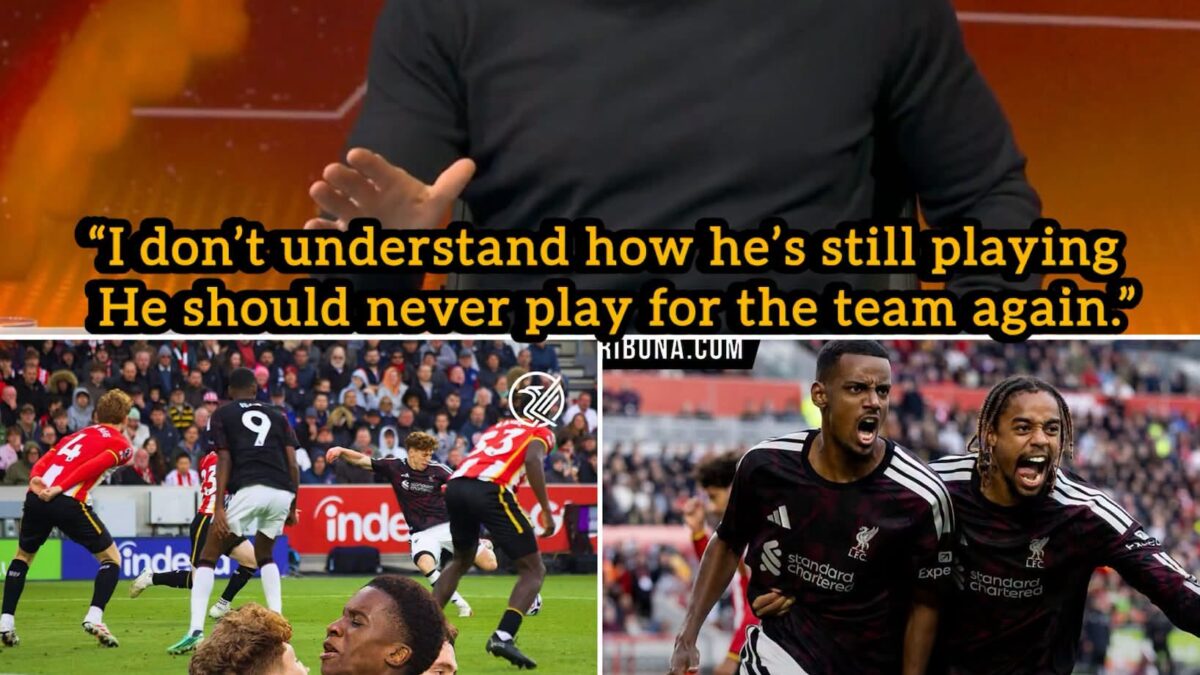
A Liverpool Victory Overshadowed by Controversy, Dressing-Room Tension, and Questions About One Player’s Future
Chapter 1: A Victory Nobody Was Celebrating
Liverpool had won.
The final whistle should have marked the beginning of a happy evening at Anfield. The players had secured three valuable points, the supporters had applauded from the stands, and the manager had every reason to feel satisfied with the result.
But something was wrong.
As the Liverpool players walked toward the tunnel, television cameras captured a few frustrated expressions. Some players exchanged brief words. Others kept their heads down, clearly eager to leave the pitch.
The scoreline told one story.
The performance of one particular player told another.
For much of the match, the midfielder had appeared strangely disconnected from the action. His passes lacked precision, his decisions seemed unnecessarily complicated, and several promising Liverpool attacks had broken down after he surrendered possession.
On one occasion, he received the ball in space but waited too long before releasing it. A Brentford player closed him down, intercepted the pass, and immediately launched a counterattack.
The Liverpool supporters groaned.
A few minutes later, another misplaced pass gave Brentford an opportunity to threaten the defense.
This time, the reaction from the stands was even louder.
Liverpool eventually secured the victory, but the performance left questions that could not simply be ignored.
And as the post-match discussion began, one former Liverpool defender was about to become the center of a heated debate.
His name was Jamie Carragher.
Chapter 2: Carragher’s Furious Reaction
Jamie Carragher has never been known for hiding his opinions about Liverpool.
Having spent his playing career defending the club’s badge, he understands the expectations placed on anyone who wears the famous red shirt.
For Carragher, talent alone is never enough.
Players must work for the team, respect the supporters, and demonstrate the concentration required to compete at the highest level.
In this fictional account, Carragher appeared on a post-match football discussion program and was asked whether Liverpool’s victory had been as convincing as the scoreline suggested.
He leaned forward.
“People are going to look at the result and say Liverpool did their job. But we need to talk about the performance.”
The presenter asked him what concerned him most.
Carragher shook his head.
“I don’t care how talented a player is. If you’re wearing that shirt, you have responsibilities. You can’t give the ball away repeatedly, fail to track runners, and expect everyone to celebrate because the team managed to win.”
The studio became quiet.
He continued.
“Liverpool cannot afford to carry passengers. Every player has to contribute. If someone repeatedly fails to meet the standards required at this club, the manager has to make a difficult decision.”
The presenter interrupted.
“Are you saying this player should leave Liverpool?”
Carragher paused.
“In this hypothetical situation, if a player refuses to improve and continues performing below the required level, then yes, his future has to be questioned.”
The statement immediately became the most discussed moment of the program.
Within minutes, clips of the exchange began circulating among football fans.
Some supporters agreed with the criticism.
Others argued that Carragher was being too harsh after a victory.
But almost everyone was asking the same question.
Who was the player being discussed, and what would happen next?
Chapter 3: The Player at the Center of the Storm
Inside Liverpool’s dressing room, the atmosphere was very different from the celebrations expected after three points.
The players had worked hard to secure the result. They knew football was rarely perfect, and they understood that even the best teams sometimes struggled to control matches.
But they also knew that individual mistakes could change the course of a season.
The player under scrutiny sat quietly in front of his locker.
He could hear conversations taking place around him.
Nobody directly confronted him.
Nobody openly blamed him.
Yet the silence felt uncomfortable.
He had seen the online reaction already. His phone had filled with notifications, and supporters were posting clips of his misplaced passes alongside angry comments about his attitude.
Some accused him of playing without urgency.
Others claimed he had become too comfortable with his position in the team.
A few demanded that the manager drop him immediately.
The criticism was difficult to ignore.
But the most painful part was not the comments from strangers.
It was the possibility that people inside the club might have started to lose confidence in him.
He had worked for years to reach this level.
He had sacrificed holidays, spent countless hours training, and fought through difficult periods to earn his place among elite professionals.
Now, after one disappointing performance, it seemed that everything he had achieved was being questioned.
He put his phone away.
For the first time that evening, he asked himself a question he had been avoiding.
Had he really been giving Liverpool everything he had?
Or had he allowed his own confidence to become complacency?
He didn’t yet know the answer.
But he knew that the next few weeks could define his future.

Chapter 4: The Manager Faces Difficult Questions
The following press conference was uncomfortable.
Journalists had prepared questions about Liverpool’s victory, but the discussion quickly turned toward the controversy surrounding the midfielder.
One reporter asked the manager whether he agreed with Carragher’s assessment.
The manager remained composed.
“Jamie is entitled to his opinion. Everyone who watches football can analyze a performance and decide what they think.”
Another journalist followed up.
“Do you believe the player is becoming too comfortable in the team?”
The manager paused before answering.
“I think every player has good matches and difficult matches. What matters is how they respond. We evaluate performances over time, not simply through one moment or one headline.”
It was a measured answer.
But it did not end the speculation.
The journalists wanted to know whether the player would start the next match.
Would he be dropped?
Would he receive additional training?
Could Liverpool consider selling him if his performances failed to improve?
The manager declined to reveal his plans.
Behind the scenes, however, the coaching staff began reviewing the match in detail.
They examined his positioning, his passing decisions, his movement when Liverpool were out of possession, and the way he responded after making mistakes.
The objective was not to punish him for a single bad performance.
It was to determine whether the problems could be corrected.
Liverpool had a long season ahead.
The club needed players who could respond to pressure, accept criticism, and learn from difficult moments.
And the manager wanted to discover whether this player still had the determination to do exactly that.
Chapter 5: Liverpool Supporters Are Divided
Across Liverpool, supporters argued about the controversy long after the match had ended.
In pubs, on social media, and in football discussion groups, the same questions appeared repeatedly.
Was Carragher right to demand higher standards?
Was the player genuinely underperforming, or had the criticism become exaggerated?
And should a single poor performance be enough to threaten a player’s future at a club as demanding as Liverpool?
One group of supporters believed Carragher had identified a serious problem.
They argued that Liverpool’s success depended on collective effort. A player could possess exceptional technical ability, they said, but that ability meant little if he repeatedly gave away possession or failed to contribute defensively.
For these supporters, the issue was not simply about passing accuracy.
It was about responsibility.
They wanted every player to demonstrate urgency, concentration, and respect for the shirt.
Another group strongly disagreed.
They pointed out that footballers were human beings who could experience difficult periods. A misplaced pass did not automatically indicate arrogance, and a quiet expression on the pitch did not prove that a player lacked commitment.
They also argued that former players working as television pundits had a responsibility to distinguish between tactical criticism and personal attacks.
A player could deserve criticism for his performance without having his character questioned.
That distinction became an important part of the debate.
And as the argument continued, the controversy became larger than one match.
It became a discussion about the expectations placed on modern footballers and the way public criticism could affect their careers.
Chapter 6: The Private Conversation Nobody Expected
Two days later, the player arrived at the training ground earlier than usual.
He wanted to work.
Not because the cameras were watching, and not because he hoped to silence every critic immediately.
He simply needed to understand what had gone wrong.
The training session was demanding.
He worked on short passing combinations, practiced receiving the ball under pressure, and repeated exercises designed to improve his awareness before possession arrived.
After the session, the manager asked him to stay behind.
They sat together in a quiet office overlooking the training pitches.
The manager did not begin by mentioning Carragher.
Instead, he asked a simple question.
“How do you think you played?”
The player looked down.
“Not well enough.”
“Why?”
“I rushed some decisions. On other occasions, I waited too long. I lost the ball in areas where I shouldn’t have.”
The manager nodded.
“And your reaction after those mistakes?”
The player hesitated.
“I think I became frustrated. I tried to make up for the mistakes too quickly.”
“That can make things worse,” the manager replied. “You cannot control every outcome, but you can control your next decision.”
The player listened carefully.
The manager continued.
“You are here because we believe you have qualities that can help this team. But reputation does not guarantee your place. Nobody is entitled to play simply because of what they have done in the past.”
The words were difficult to hear.
But they were fair.
The player finally looked up.
“What do you want me to do?”
“Show us that you can respond. Make the simple pass when the simple pass is right. Work for your teammates. When you make a mistake, recover immediately. And if you disagree with something, speak to us rather than allowing frustration to affect your game.”
The player nodded.
He had expected anger.
Instead, he had received a challenge.
And perhaps that was exactly what he needed.
Chapter 7: Carragher’s Comments Continue to Dominate Headlines
Despite the manager’s measured response, the controversy refused to disappear.
Television programs replayed the midfielder’s mistakes. Online commentators debated his future, while former players offered different interpretations of his performance.
Some insisted that Liverpool needed a major change.
Others argued that selling a player after a difficult period would be a mistake.
Carragher’s criticism became a symbol of the debate.
To some fans, he represented the uncompromising standards that had helped define Liverpool’s identity.
To others, his words illustrated how quickly football analysis could become unnecessarily personal.
But the most important question remained unanswered.
How would the player respond when he returned to the pitch?
Football has a way of making arguments temporary.
A player criticized on Saturday can become a hero the following weekend. Someone praised for a decisive goal can face scrutiny after a costly mistake in the next match.
Reputation changes quickly.
Consistency is much harder to achieve.
For the Liverpool midfielder, the controversy created an opportunity to prove that one disappointing performance did not define him.
But he would need more than a single good pass or an impressive training session.
He would need to demonstrate that he understood what Liverpool demanded from him.
And he would need to do it when the pressure was greatest.
Chapter 8: The Response on the Training Ground
Throughout the week, the player focused on the details that had caused problems against Brentford.
He studied footage of his positioning.
He examined situations in which a quicker decision could have helped Liverpool maintain possession.
He worked with teammates to improve his movement and communication.
The coaches noticed the change.
He arrived early, stayed focused during drills, and asked questions when he needed clarification.
Nobody promised that he would immediately return to the starting lineup.
Nobody guaranteed that the controversy would disappear.
But his attitude toward the work began to change.
One afternoon, a younger teammate misplaced several passes during a training exercise.
The midfielder approached him.
“Don’t let one mistake become three,” he said. “Forget the last pass and focus on the next one.”
The younger player nodded and returned to the drill.
The midfielder recognized the advice because it was exactly what the manager had told him.
He was beginning to understand that responding to criticism did not mean trying to prove everyone wrong with one spectacular moment.
It meant becoming more reliable.
It meant accepting responsibility without allowing embarrassment to destroy confidence.
And it meant understanding that football was never simply about an individual’s reputation.
It was about the team.
Chapter 9: One Match to Change the Conversation
When the next match arrived, the midfielder knew that every touch would be examined.
Supporters would watch his first pass.
Commentators would discuss his movement.
Critics would look for evidence that the previous performance had been part of a larger problem.
The pressure was enormous.
But as he stepped onto the pitch, he reminded himself of the conversation with his manager.
Focus on the next decision.
During the opening minutes, he kept his passing simple.
He moved into space, offered support to his teammates, and avoided forcing difficult balls into crowded areas.
When he lost possession once, he immediately worked to recover his position.
It was not spectacular football.
It was responsible football.
As the match developed, his confidence began to return.
He played a well-timed pass that helped create a promising attack. Later, he tracked an opponent’s run and helped prevent a dangerous counterattack.
The crowd responded with applause.
There was no dramatic celebration.
No grand gesture toward the cameras.
Just a player doing the work required of him.
By the final whistle, he had produced a more disciplined performance.
It did not automatically settle every question about his future.
But it demonstrated something important.
He was capable of learning.
And in a club where competition for places was relentless, that willingness to improve could matter as much as raw talent.
Chapter 10: What Happens Next at Liverpool?
The fictional controversy surrounding Carragher’s criticism raises a larger question about elite football.
How much patience should a club show a struggling player?
Liverpool operate in an environment where expectations are enormous. Supporters expect players to compete for trophies, perform consistently, and demonstrate commitment in every match.
At the same time, football is unpredictable.
Even experienced professionals can experience periods when their confidence disappears or their decision-making deteriorates.
The challenge for a manager is to distinguish between a temporary loss of form and a deeper problem that requires intervention.
That decision cannot be based on headlines alone.
It requires detailed performance analysis, honest conversations, and a clear understanding of what the player contributes to the team.
For the midfielder, the path forward would depend on consistency.
One good performance would help.
Several good performances would be more convincing.
And a sustained improvement in decision-making, defensive effort, and teamwork would provide the strongest response to his critics.
Whether that would secure his long-term future at Liverpool would remain a separate question.
At a club of Liverpool’s stature, no player can assume that his position is guaranteed.
But neither should a player be judged entirely by one difficult afternoon.
The real test is what happens afterward.
Final Chapter: The Liverpool Shirt Means Everything
At the end of the week, the midfielder returned home exhausted.
The criticism had affected him more than he wanted to admit.
He had read comments questioning his ability, his attitude, and even whether he deserved to represent Liverpool.
Some of those comments were unfair.
Others had forced him to confront problems he could no longer ignore.
He sat quietly for a moment and thought about the journey that had brought him to the club.
The training sessions.
The sacrifices.
The moments when he had dreamed of playing at Anfield.
He remembered how proud he had felt the first time he wore the Liverpool shirt.
That memory reminded him why the criticism hurt.
Because Liverpool mattered to him.
The next morning, he returned to work with a clearer understanding of what he needed to do.
He could not control every opinion.
He could not prevent every headline.
And he could not demand that supporters trust him simply because he wanted them to.
All he could do was perform.
Train harder.
Make better decisions.
Support his teammates.
And prove through his actions that he was prepared to meet the club’s standards.
Meanwhile, the debate surrounding Carragher’s comments continued.
Some fans wanted Liverpool to move on from the player.
Others believed he deserved time to demonstrate that he could improve.
But the season was far from over, and the final answer would not come from a television studio or a social media argument.
It would come on the pitch.
Because in football, criticism can start a conversation.
Only performances can change it.
What do you think? Was the criticism justified, or should Liverpool give the player more time to prove himself?
Share your opinion in the comments.
YNWA. 🔴
You Might Also Enjoy
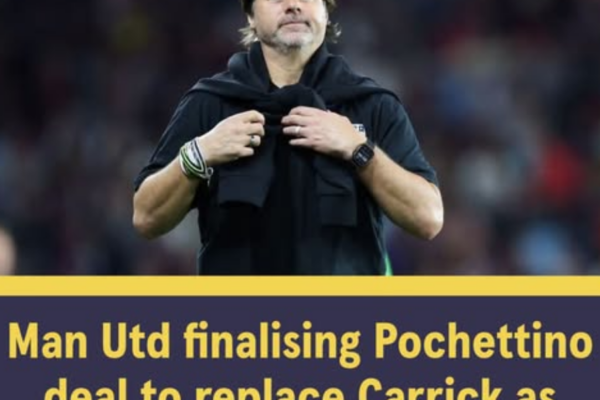
Manchester United finalising deal to appoint Mauricio Pochettino as Carrick replacement

Single Dad Took Two Bullets Saving the Army General’s Daughter — “Move, I’ll Handle This!”

They Tried to Take the Stray Puppy—Then the Quiet Nurse Realized Why the K9 Needed Him