Luis Enrique Names Arsenal as the Premier League’s Toughest Opponent: “They Were More Difficult Than Manchester City!” 🔥🔴⚪
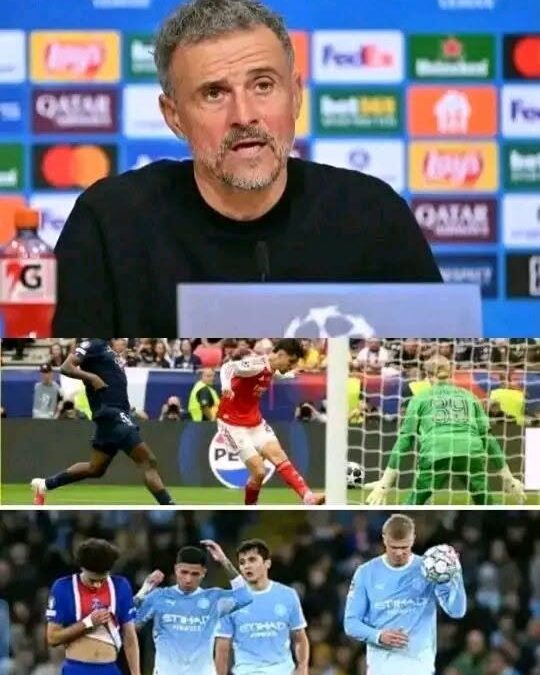
Arsenal are earning growing respect across European football, and their defensive strength, tactical discipline, and competitive intensity have made them a difficult opponent for even the most accomplished managers.
A statement circulating online and attributed to Paris Saint-Germain manager Luis Enrique has sparked debate among football fans, particularly because it compares Arsenal’s challenge with that of Premier League giants Manchester City, Liverpool, and Chelsea.
The message is clear: Arsenal’s combination of defensive organization, physical strength, and tactical intelligence can make them exceptionally difficult to break down.
According to the circulating quote, Enrique praised Arsenal’s defenders, specifically mentioning William Saliba, Gabriel Magalhães, and Jurrien Timber, while suggesting that Arsenal would be a fascinating opponent in a Champions League final.
Although the authenticity of the full quotation has not been independently confirmed, the footballing discussion behind it highlights why Arsenal have become such a respected force in European competition.
Arsenal’s Defensive Wall Is Becoming Their Greatest Weapon 🧱
One of Arsenal’s biggest strengths under Mikel Arteta has been their ability to defend as a unit.
Saliba and Gabriel have developed into one of the most formidable centre-back partnerships in European football. Their combination of strength, positional awareness, aerial ability, and composure allows Arsenal to withstand sustained pressure against elite opposition.
Saliba is particularly effective at reading danger before it develops. His pace allows him to recover when opponents attempt to exploit space behind the defensive line, while his calmness in possession helps Arsenal build attacks from the back.
Gabriel brings another dimension. He is aggressive in duels, powerful in the air, and dangerous during set pieces. His physical presence makes it difficult for opposing forwards to establish themselves inside the penalty area.
Then there is Timber, whose versatility and ability to defend one-on-one situations provide Arsenal with additional flexibility.
Together, these defenders help create a system in which opponents often struggle to find clear passing lanes into dangerous areas.
Breaking through such an organized defense requires patience, movement, technical quality, and intelligent combinations. Simply dominating possession is not always enough.
That is why Arsenal’s defensive structure has become such an important part of their identity.
Why Arsenal Can Give Europe’s Biggest Teams Problems
The best defensive teams do more than prevent goals. They influence how their opponents play.
Arsenal’s compact shape can force opposing attackers toward the wings, where passing options become more predictable and space is limited.
Their midfielders also play a crucial role by closing passing lanes and applying pressure at the right moments. This reduces the time opposing playmakers have to turn, pick a pass, or create opportunities between the lines.
When Arsenal regain possession, they can quickly transition into attack, using the technical quality and movement of their forwards to exploit spaces left behind.
This combination of defensive solidity and attacking threat makes them dangerous against teams that prefer to dominate possession.
It also explains why matches against Arsenal can become tactical battles rather than straightforward tests of attacking quality.
Opponents must find ways to move Arsenal’s defensive block, create overloads in wide areas, and identify opportunities before the defense can reorganize.
If they fail to do so, the game can become frustrating.

Manchester City, Liverpool, Chelsea and Arsenal: Different Challenges
The Premier League contains several teams capable of testing Europe’s elite, but they do not necessarily create problems in the same way.
Manchester City have built their reputation on positional play, technical control, and the ability to dominate possession. Their attacking structure is designed to create numerical advantages and patiently open up opposing defenses.
Liverpool have traditionally combined aggressive pressing with quick transitions and forward movement, making them dangerous when opponents lose possession.
Chelsea’s challenge can vary depending on their tactical approach, personnel, and form, but their athleticism and individual quality can make them difficult to contain.
Arsenal, meanwhile, have developed a reputation for combining structured possession with a highly organized defense and considerable strength in physical duels.
Their ability to remain compact while still threatening opponents in attack makes them particularly difficult to play against when they are performing at their best.
However, claiming that one team is objectively harder to face than another depends on the match, the tactical circumstances, and the quality of the opposition on that particular day.
A single performance cannot settle the debate permanently.
What it can do is demonstrate the level Arsenal must reach if they want to compete consistently for Europe’s biggest prizes.
Saliba and Gabriel: The Partnership That Makes Strikers Work for Everything
For Arsenal supporters, the partnership between Saliba and Gabriel has become a source of enormous confidence.
Both defenders possess the physical attributes required to compete with elite forwards, but their effectiveness comes from more than strength alone.
They communicate well, coordinate their positioning, and understand when to step forward to challenge an attacker and when to protect the space behind them.
This coordination is essential against teams with quick forwards who specialize in attacking the channels between defenders.
If one centre-back steps out of position without support, an opponent can exploit the gap. If both remain too deep, they may allow attacking midfielders too much space to receive the ball and turn.
Arsenal’s defensive organization helps reduce these risks.
Timber adds another important dimension because he can contribute in different defensive positions and offers the mobility needed to deal with opponents who try to stretch the back line.
The result is a defense that can challenge opponents physically while maintaining the discipline required at the highest level.
For any team hoping to score against Arsenal, finding the right attacking solution is a major tactical challenge.
Would Arsenal Be the Ideal Champions League Final Opponent?
The idea of Arsenal meeting Paris Saint-Germain in a Champions League final would be fascinating for several reasons.
Both clubs have invested heavily in building squads capable of competing at the highest level, and both have sought to establish themselves among Europe’s most successful teams.
A final between them would present an intriguing tactical contest.
PSG’s attacking players would need to find ways to create opportunities against Arsenal’s compact defensive structure. Arsenal, in turn, would have to deal with PSG’s technical quality, movement, and ability to accelerate attacks in tight spaces.
The midfield battle could be decisive.
If Arsenal controlled the central areas and limited PSG’s ability to play between the lines, they could force the French side to rely more heavily on wide attacks and attempts from distance.
If PSG moved the ball quickly enough to disrupt Arsenal’s defensive shape, they could create the openings needed to decide the match.
Neither team would have an easy route to victory.
And that is precisely what makes the possibility so compelling.
A Champions League final is not merely a test of individual talent. It demands composure, tactical flexibility, mental strength, and the ability to perform when one mistake can determine an entire season.
Why Arsenal Supporters Can Believe in Their Team
Arsenal’s progress under Arteta has been built on a clear tactical identity and the development of a squad capable of competing with Europe’s strongest clubs.
The team has increasingly demonstrated that it can defend against elite attacks, control difficult matches, and compete physically without abandoning its commitment to playing organized football.
The presence of defenders such as Saliba, Gabriel, and Timber gives Arsenal a strong foundation. Their quality allows the midfield and attacking players to operate with greater confidence, knowing that the team has a defensive structure capable of dealing with dangerous situations.
But winning the Champions League requires more than defensive excellence.
Arsenal must also convert chances, manage pressure, avoid costly mistakes, and demonstrate consistency throughout the knockout stages.
The finest margins often decide European football’s biggest matches.
One set piece, one moment of individual brilliance, or one defensive lapse can change everything.
If Arsenal can combine their defensive organization with clinical finishing and composure under pressure, they have the ingredients needed to challenge for the trophy.
Respect Is Growing, but the Ultimate Test Remains
The reported comments attributed to Luis Enrique have generated interest because they reflect a question that football fans increasingly debate: how far can Arsenal go in Europe?
Their defensive quality is undeniable, and their tactical development has made them a more complete team.
But comparisons between Arsenal, Manchester City, Liverpool, Chelsea, and PSG should be based on verified performances rather than unconfirmed quotations circulating online.
The claim that Enrique specifically described Arsenal as his toughest Premier League opponent, or expressed a preference to face them in a Champions League final, should not be treated as an authenticated statement without a reliable source.
Still, the underlying football debate is worth having.
Arsenal have built a team capable of making life difficult for elite opponents. Their defensive partnership, collective discipline, and tactical organization give them a platform from which to compete with the strongest clubs in Europe.
Now comes the challenge of turning that potential into lasting success.
Can Mikel Arteta lead Arsenal all the way to Champions League glory? And if the Gunners faced PSG in a final, would their defensive strength be enough to stop one of Europe’s most dangerous attacking teams?
Arsenal fans, share your predictions below! 🔴⚪🏆
You Might Also Enjoy



Manchester United finalising deal to appoint Mauricio Pochettino as Carrick replacement

Single Dad Took Two Bullets Saving the Army General’s Daughter — “Move, I’ll Handle This!”

They Tried to Take the Stray Puppy—Then the Quiet Nurse Realized Why the K9 Needed Him



